
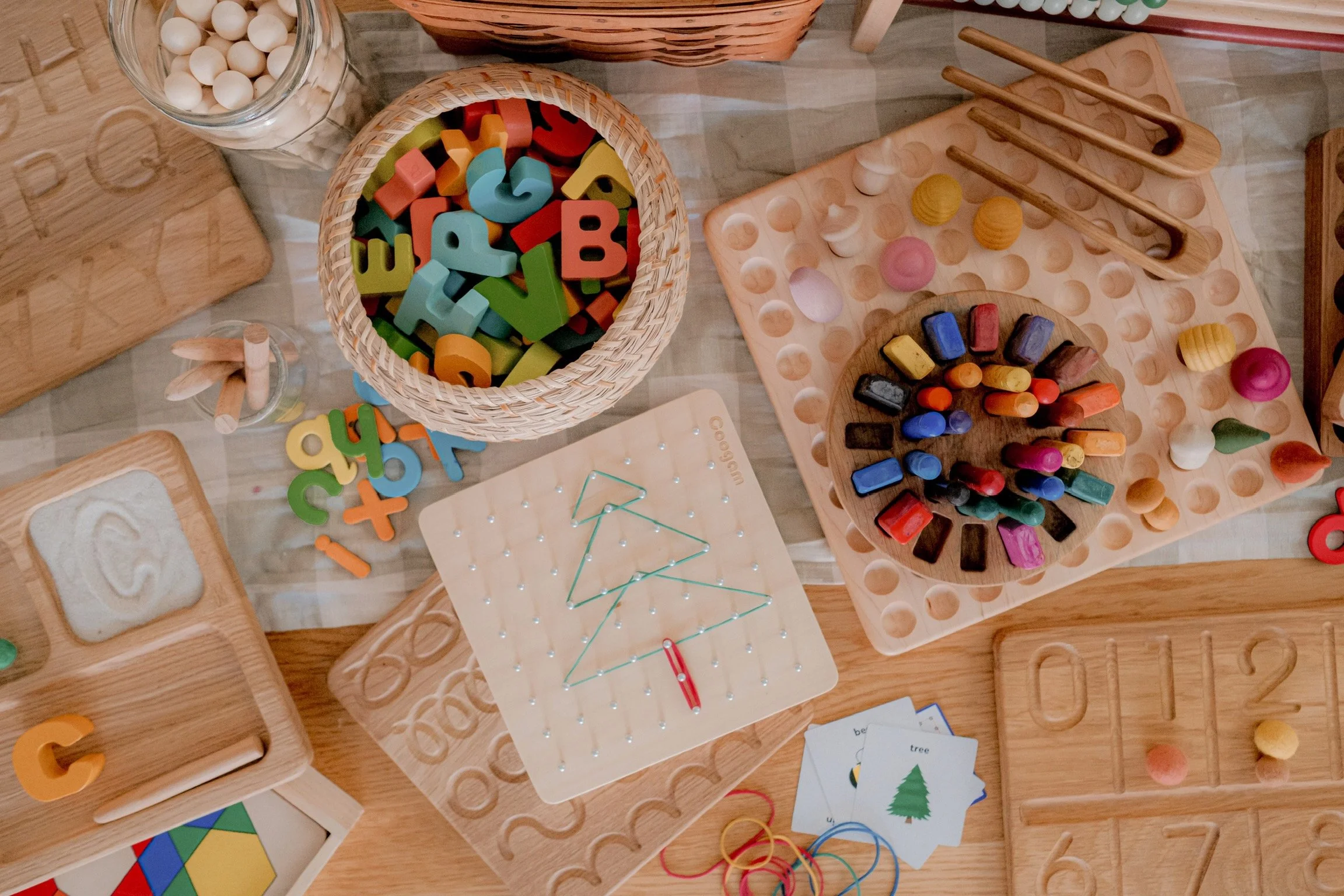
PLAY-BASED
Nurture Wildflowers Homeschooling
Preschool through Grade 3 ⚘ Ages 2-9
a non-religious but customizable curriculum
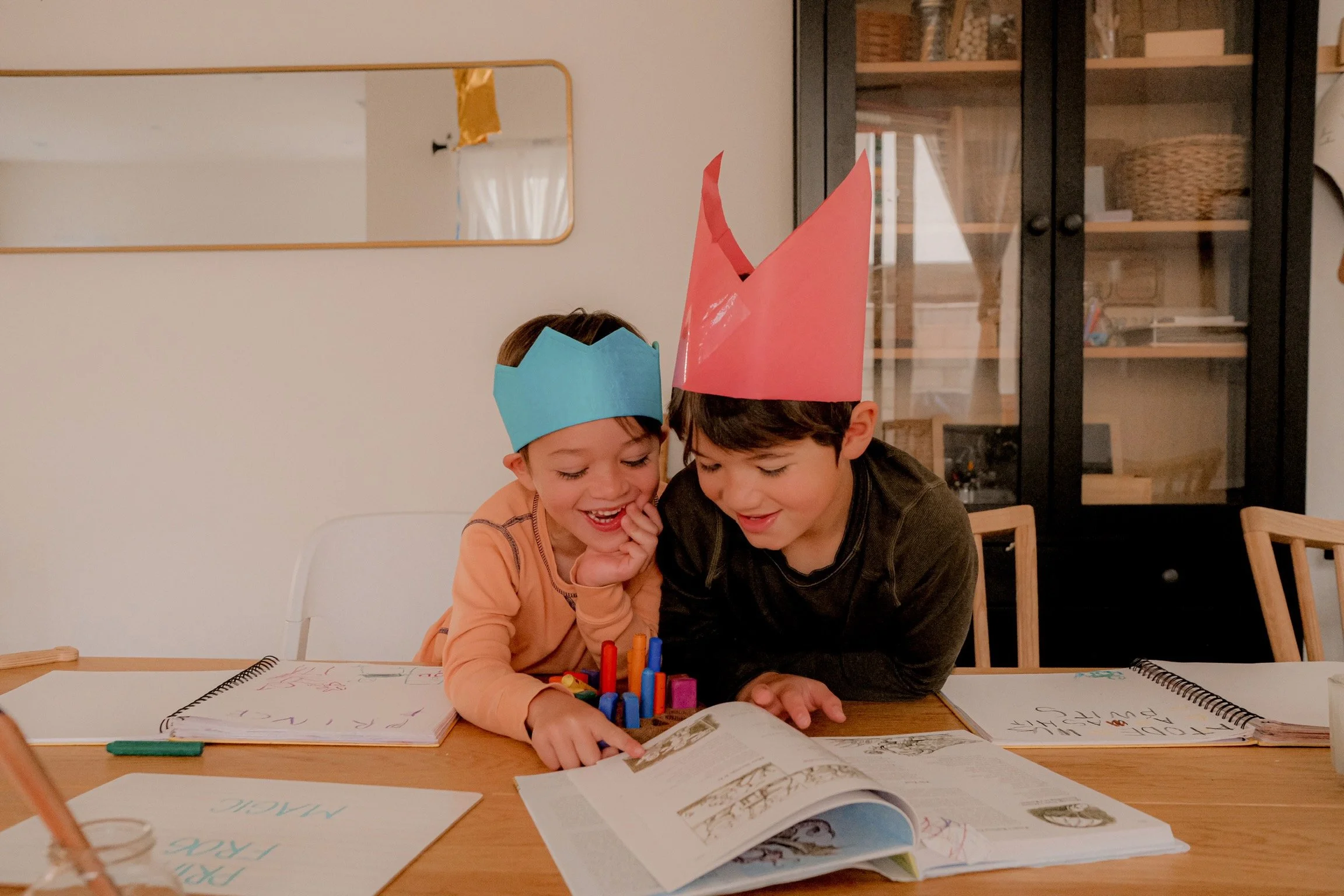
SCREEN-FREE
The early childhood curriculum you’ve been searching for.
A one-stop shop for meeting math, reading, writing, language, science, and history milestones through age 9.
tear free
⚘
effective
⚘
multisensory
⚘
hands on
⚘
alive
⚘
beautiful
⚘
tear free ⚘ effective ⚘ multisensory ⚘ hands on ⚘ alive ⚘ beautiful ⚘
literature rich
⚘
play based
⚘
interest driven
⚘
family style
⚘
nature focused
⚘
100% secular
⚘
critical thinking
⚘
literature rich ⚘ play based ⚘ interest driven ⚘ family style ⚘ nature focused ⚘ 100% secular ⚘ critical thinking ⚘
developmentally appropriate
⚘
customizable
⚘
flexible
⚘
kinesthetic
⚘
engaging
⚘
developmentally appropriate ⚘ customizable ⚘ flexible ⚘ kinesthetic ⚘ engaging ⚘
Teach your child to read and write, nurture a love for learning and literature, build a foundation for academic and life success, and enjoy your child along the way.
Play-Based Homeschool Basics
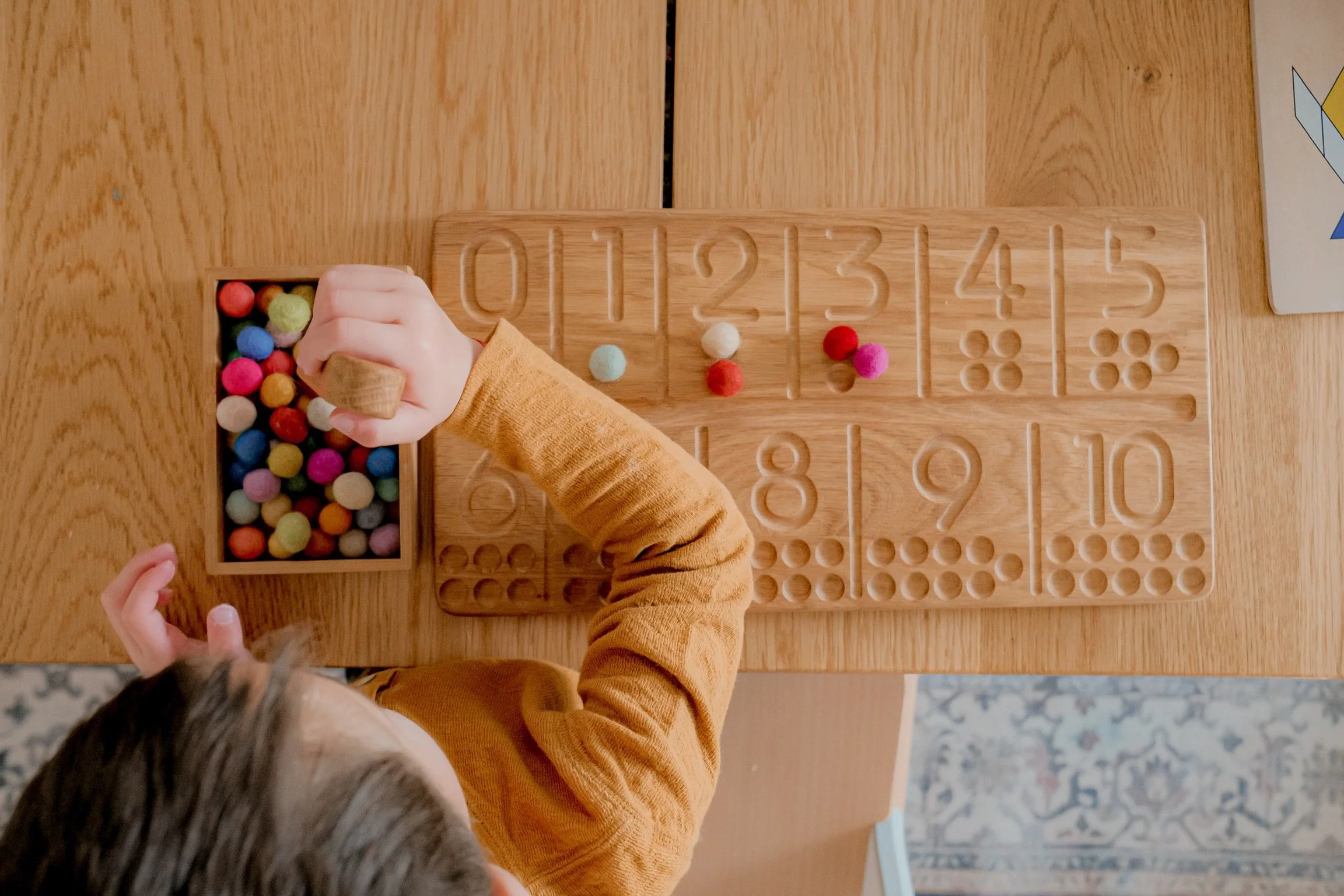
Here’s how it works:
-
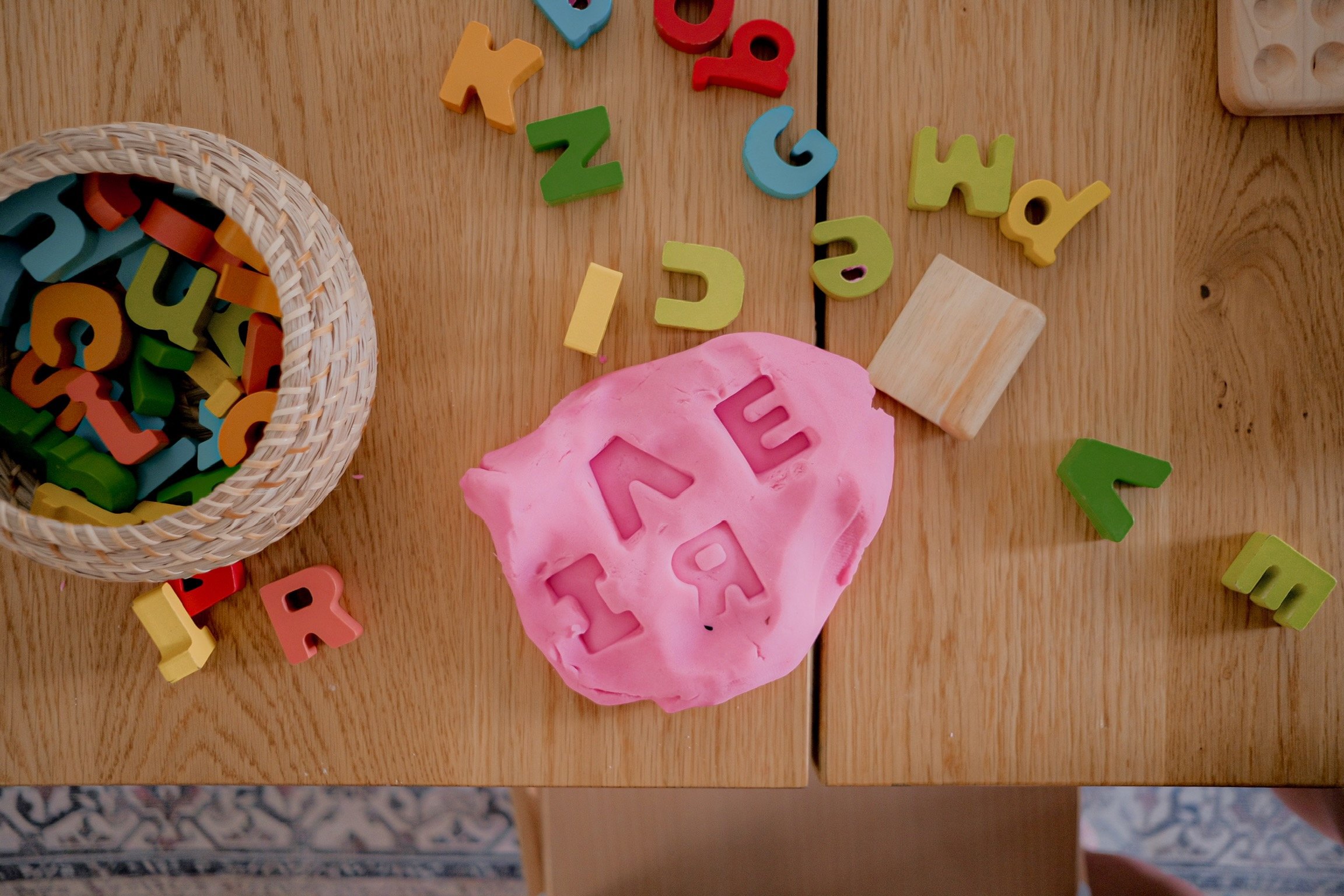
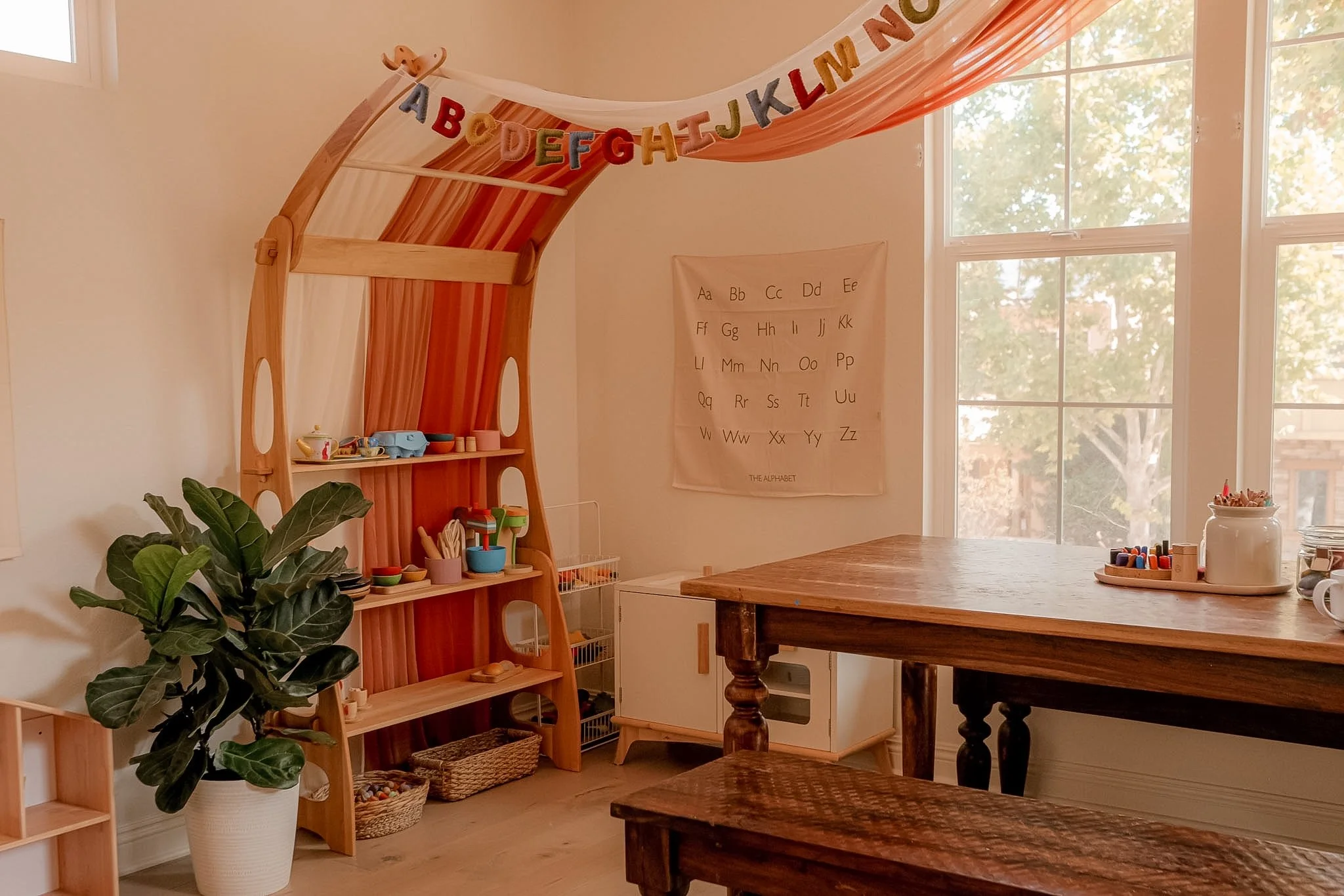
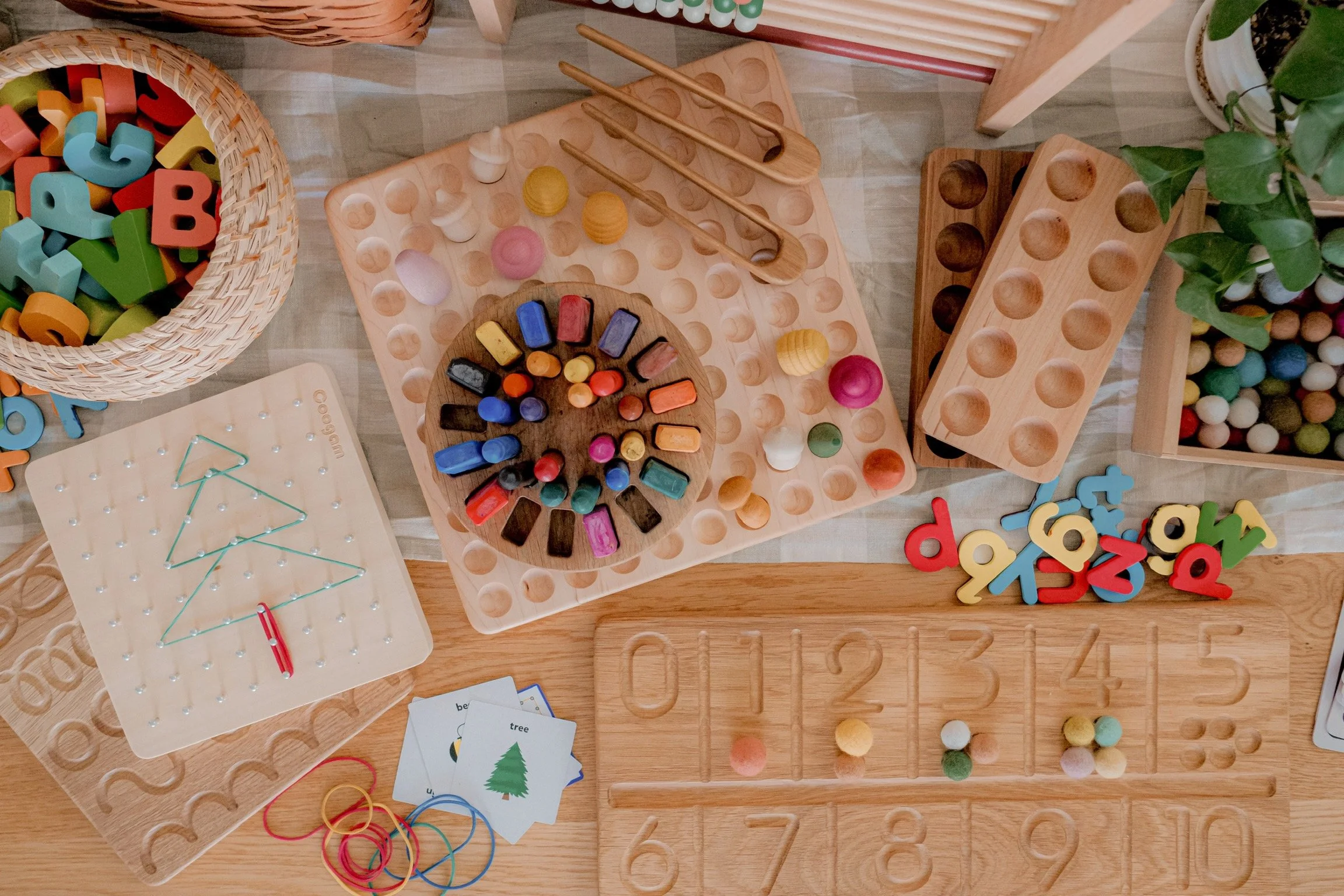
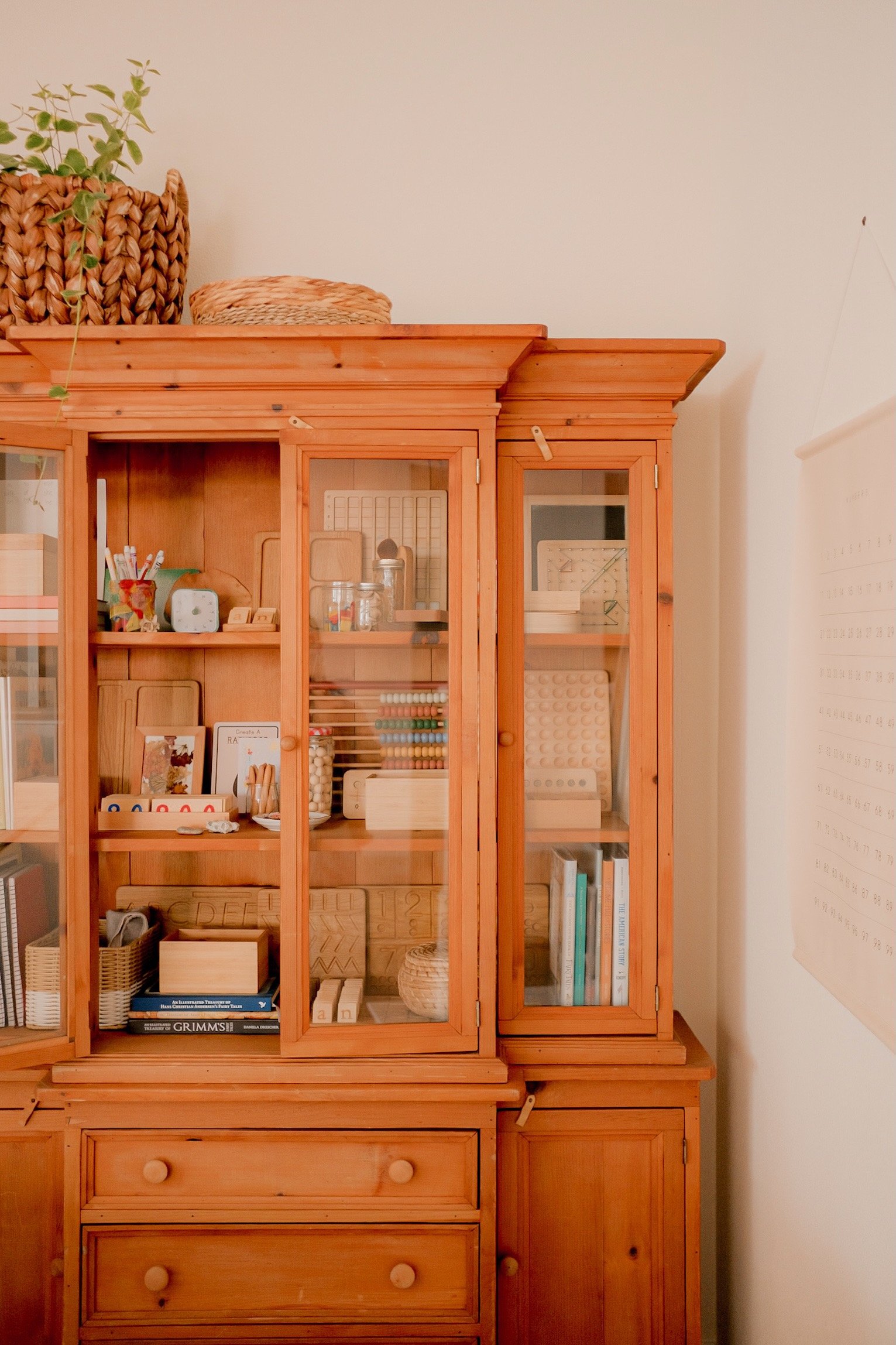
Play-based learning requires materials. The good news it that unlike workbooks, most of these materials can be used with multiple children and across ages and stages. They also hold their resale value!
Read about and shop our carefully curated selection of hands-on learning materials (budget-friendly options included).
-
The Reggio Approach uses a saying: environment as third teacher — meaning that a child’s environment is equally as powerful teachers as their adults and peers.
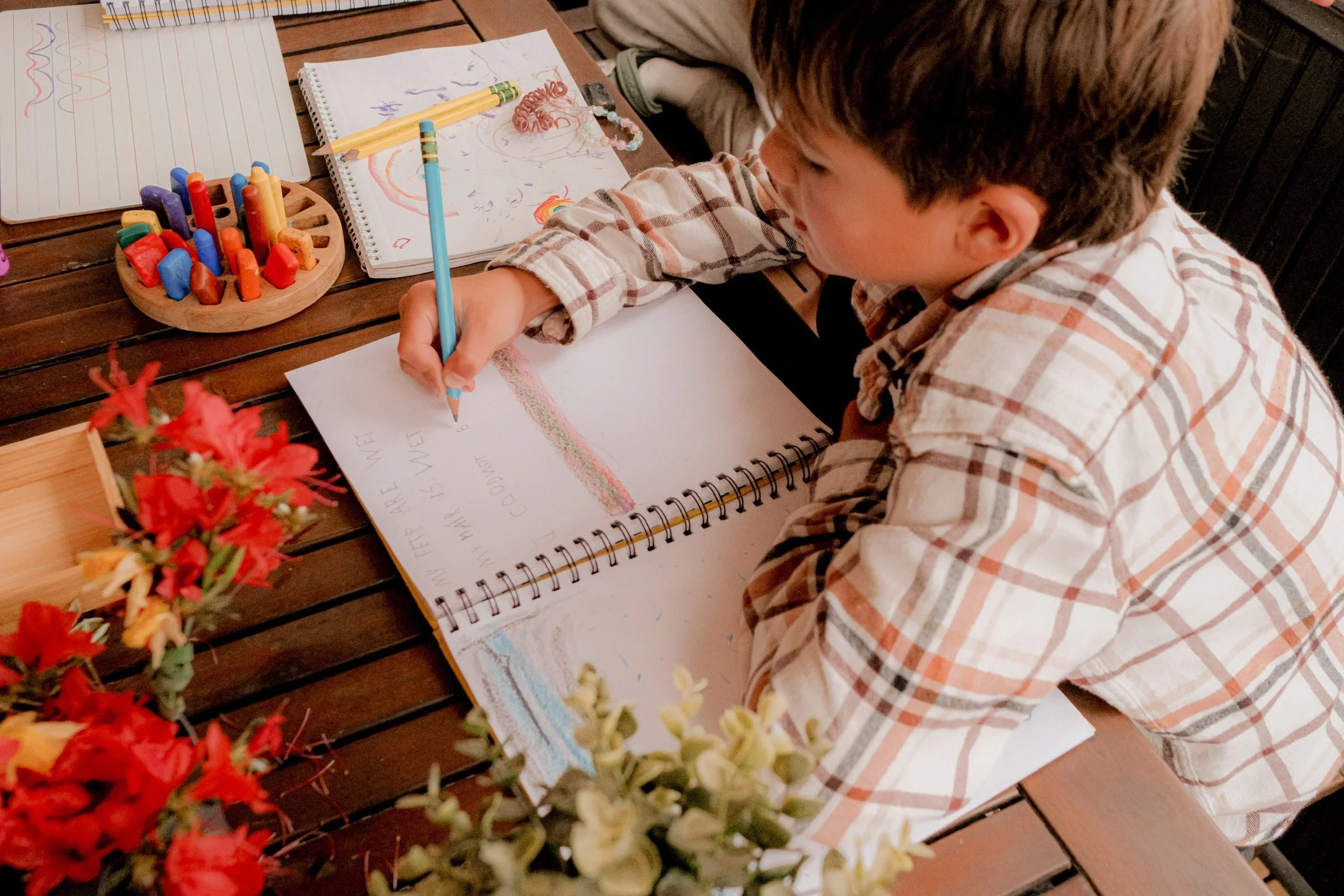
Simple changes to your environment can encourage emergent reading and writing skills, organic number sense, creative thinking, and child-led learning.
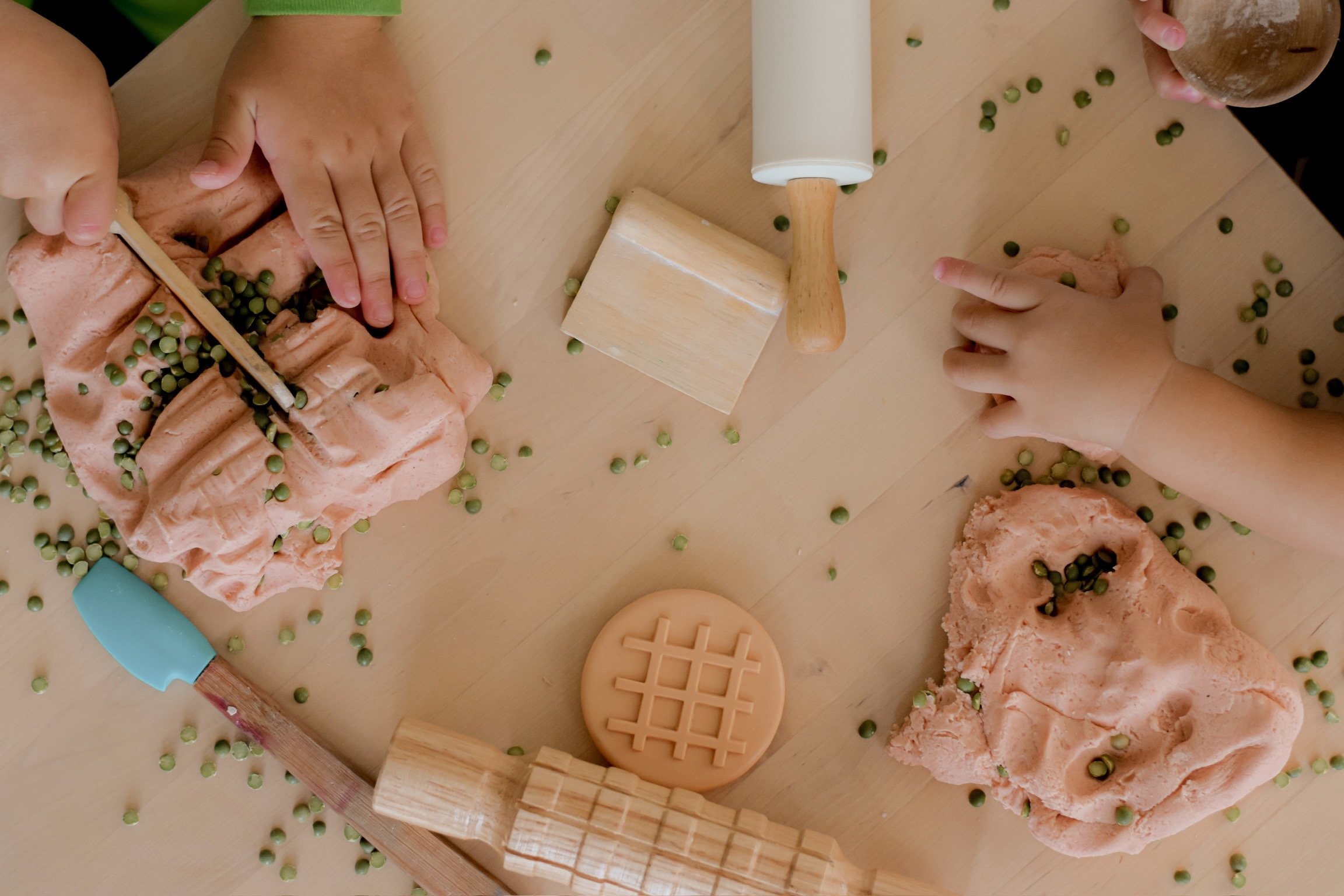
Organize your homeschool materials, prep your playdough and art spaces, and begin building your learning library.
-
Plan a homeschool rhythm that makes space for core preschool and kindergarten subjects:
Table Activities
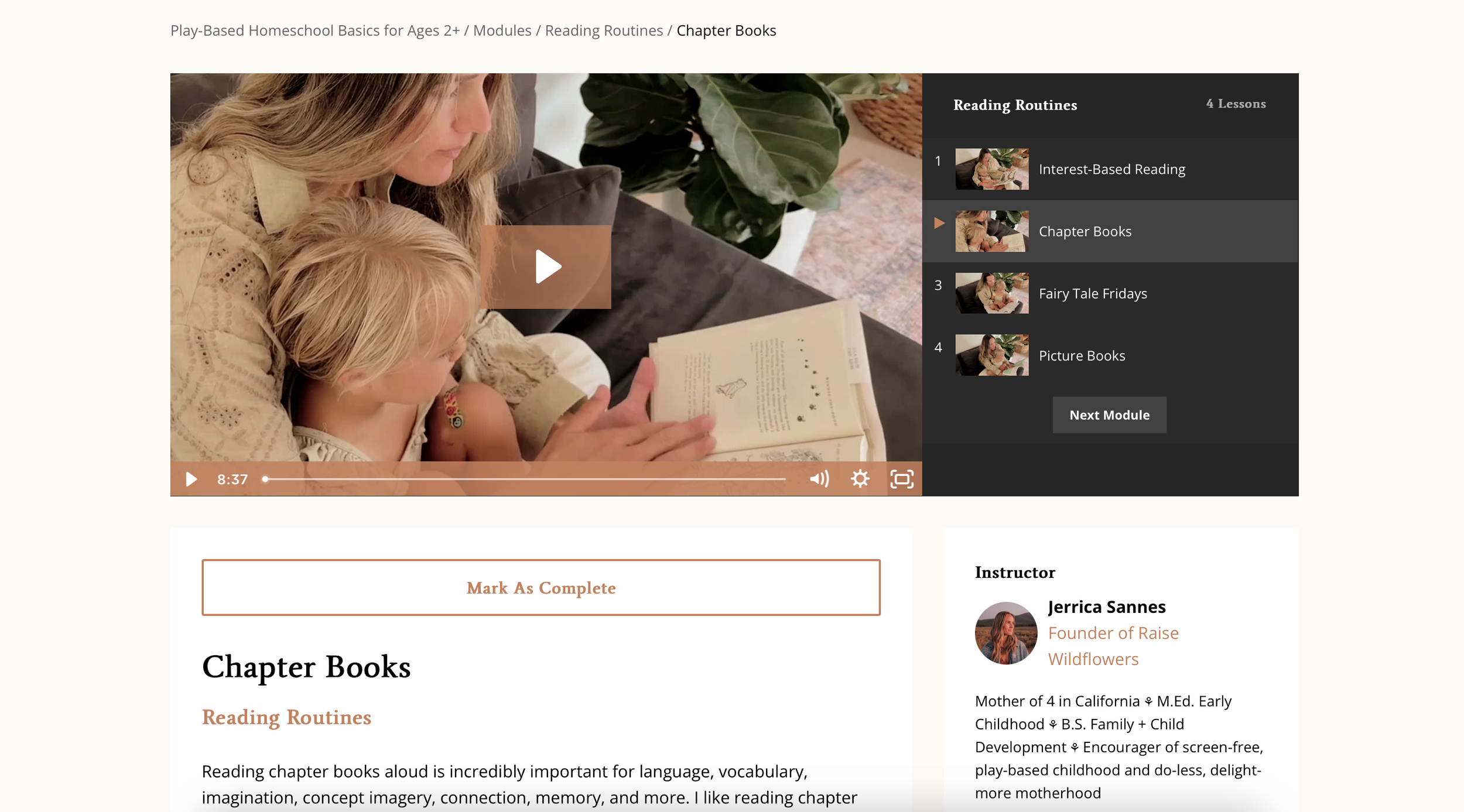
Interest-Based Reading
Chapter Book Read Alouds
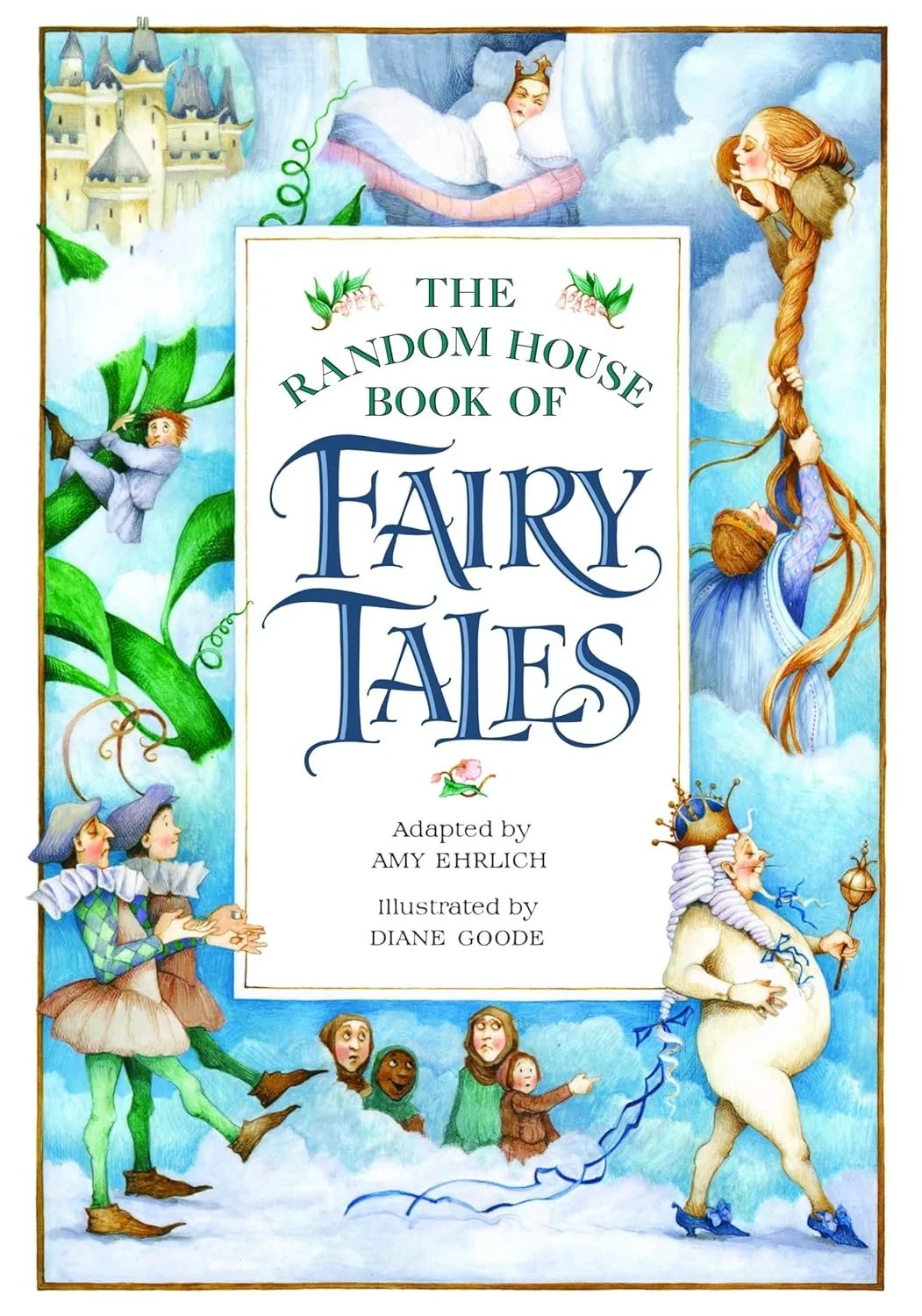
Fairy Tale Fridays
Picture Books
Practical Life
Seasonal Activities
Seasonal Recipes
Enrichment Outings
Nature Adventures
Social Play
Outdoor Hours
Unstructured Free Play
-
Jumpstart your young child’s phonemic awareness, concept imagery, and early literacy skills with an enjoyable and connection-filled Language Routine, centered around nursery rhymes and poems.
-
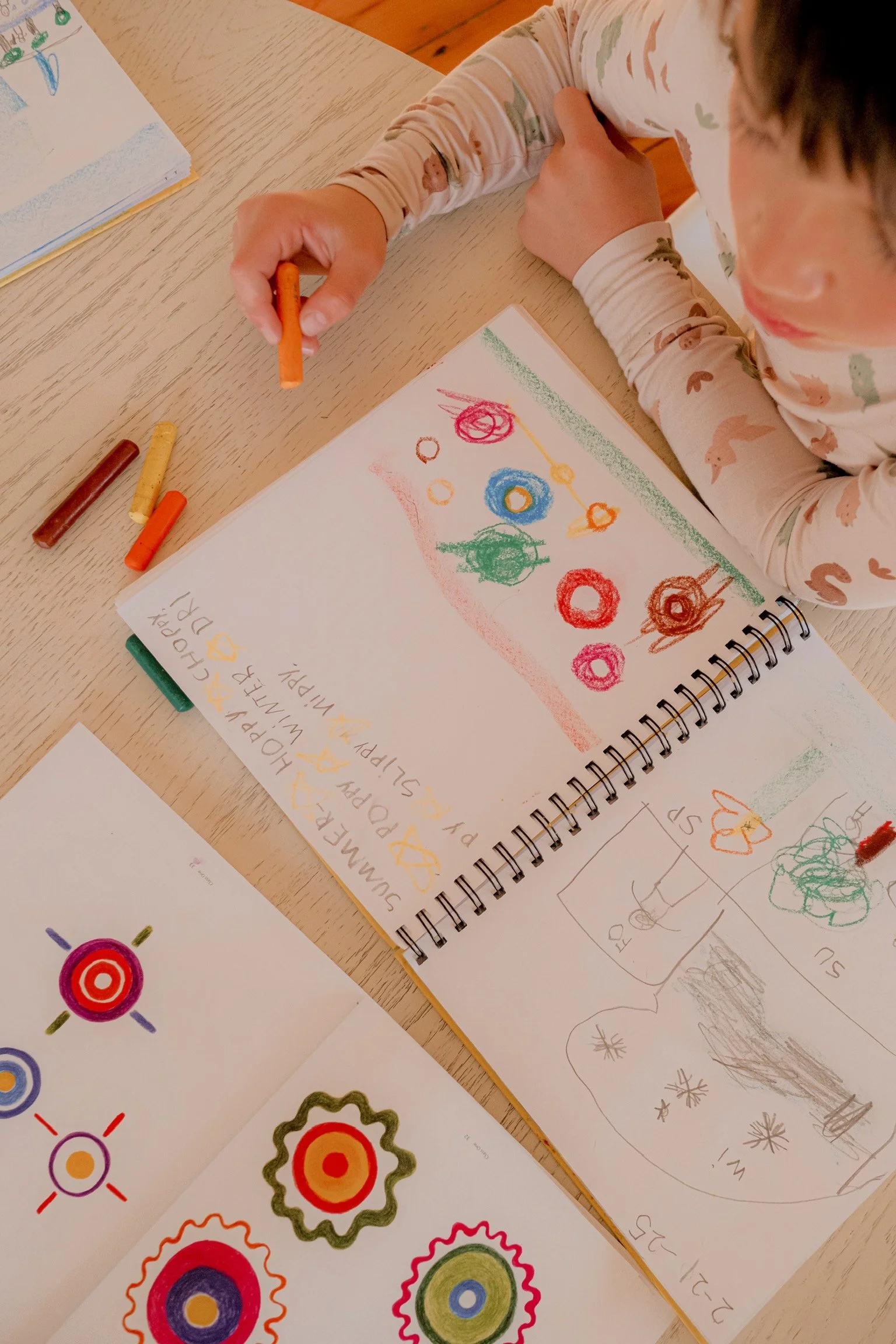
Reggio-inspired documentation uses a combination of work samples, photo evidence, and observation notes to assess early learning milestones.
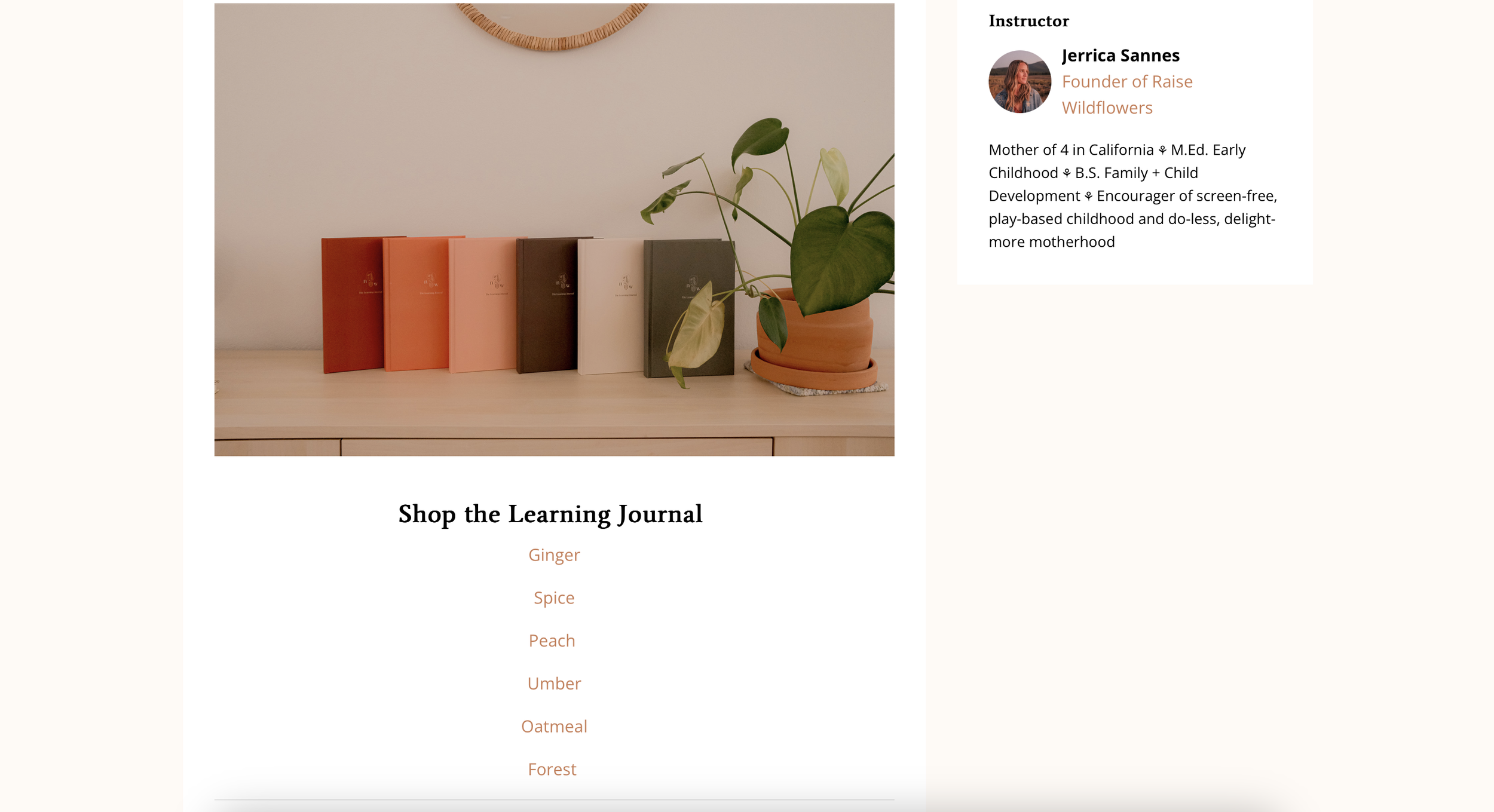
Use The Nurture Wildflowers Learning Journal to track your child’s academic progress, play schema, and current interests, then use that information to plan future books, outing, activities, and play materials.
-
Learn about Vygotsky’s Zone of Proximal Development, the Scaffolding Theory, and Bloom’s Taxonomy and equip yourself to support your child’s early learning organically in your day-to-day.
Don’t worry, it’s easier than you think.
-
Before a child ever sits down for direct academic instruction, they should have developed things like:
a coordinated visual system
a healthy sensory processing system
eye, ear, and foot dominance
risk management
a comfortable tripod grasp
And they should be able to:
Sit and focus for 20-30 minutes
Follow 2-3 step instructions
Cross their midline with ease
Incoming 1st graders (age 6 turning 7) who have accomplished these things are ready to begin our Hands-On Curriculum for Ages 6+.
6 year olds who have not accomplished these things should participate in an almost absurd amount of unstructured, sensory-rich, nature-based, movement-heavy free play until their 7th birthday.
Forget “kindergarten readiness” — these kids need free play bootcamp.
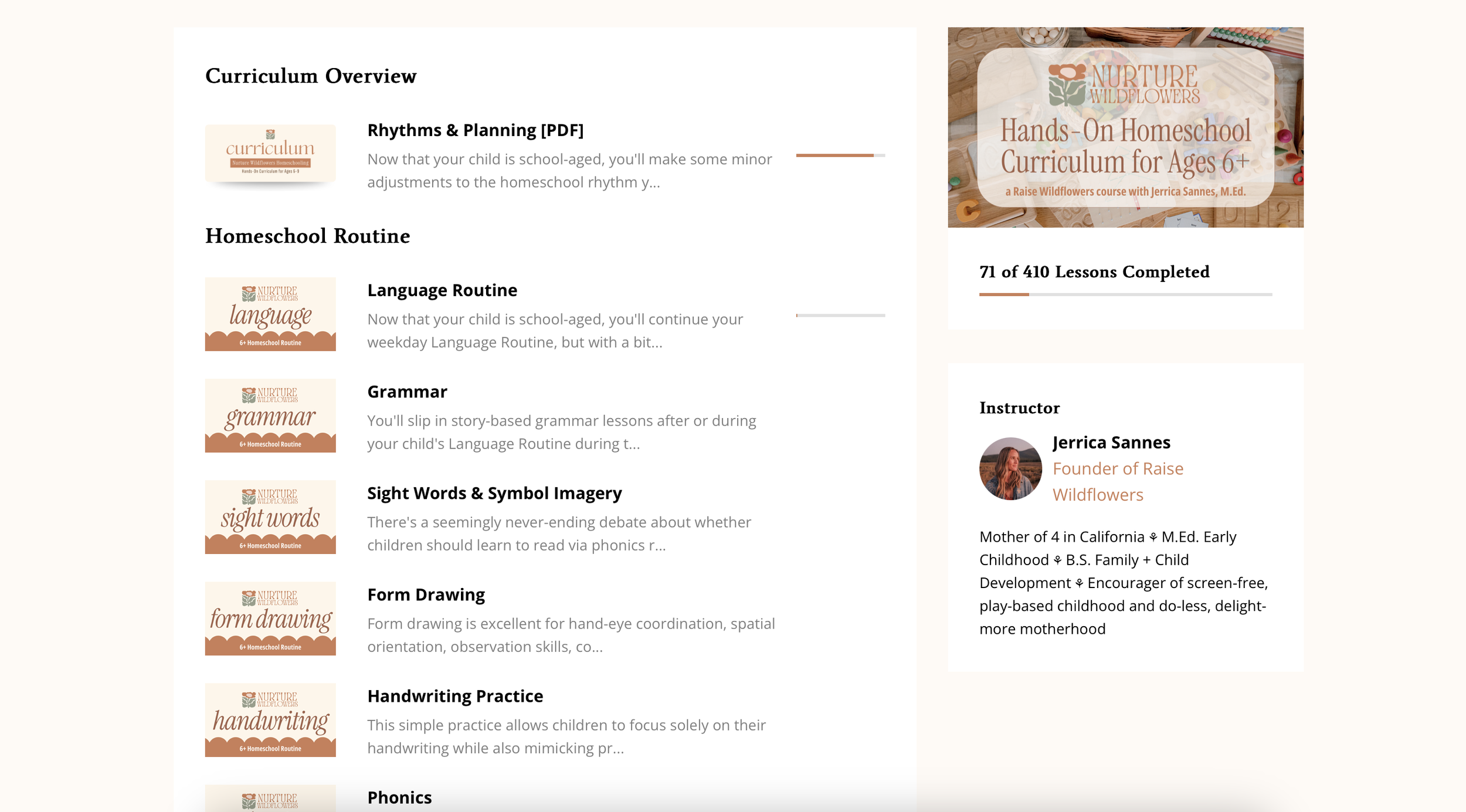
Hands-On Curriculum for Ages 6+
8 Subjects, 4 Levels Each
-
You’ll extend The Language Routine to include a dictation practice, adjusting and increasing expectations appropriately across the four grade levels.
-
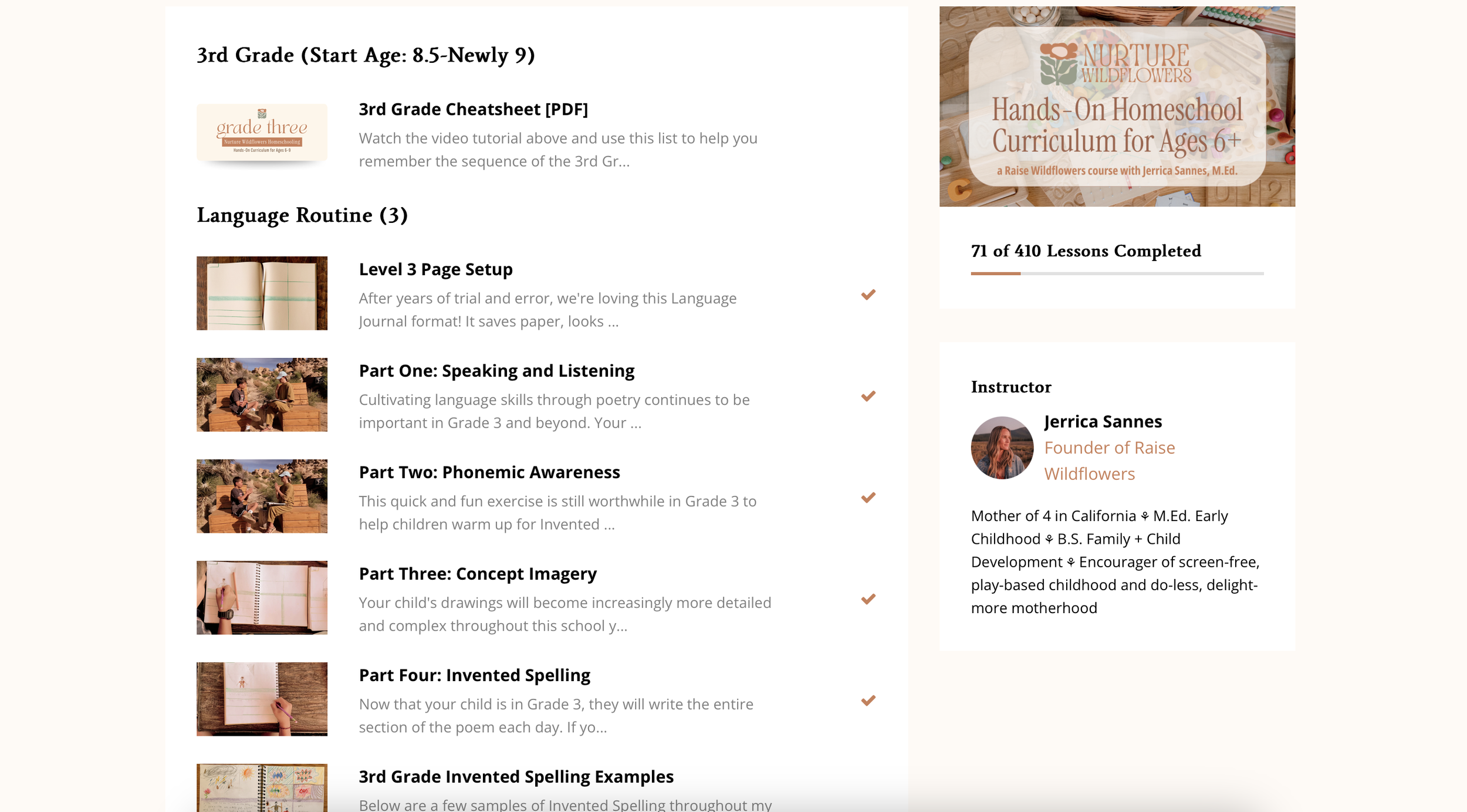
Set your child up for spelling success using simple, fun, and often funny sensory-cognitive exercises inspired by Lindamood-Bell. Third graders will also revisit phonics rules and work to perfect their spelling skills.
-
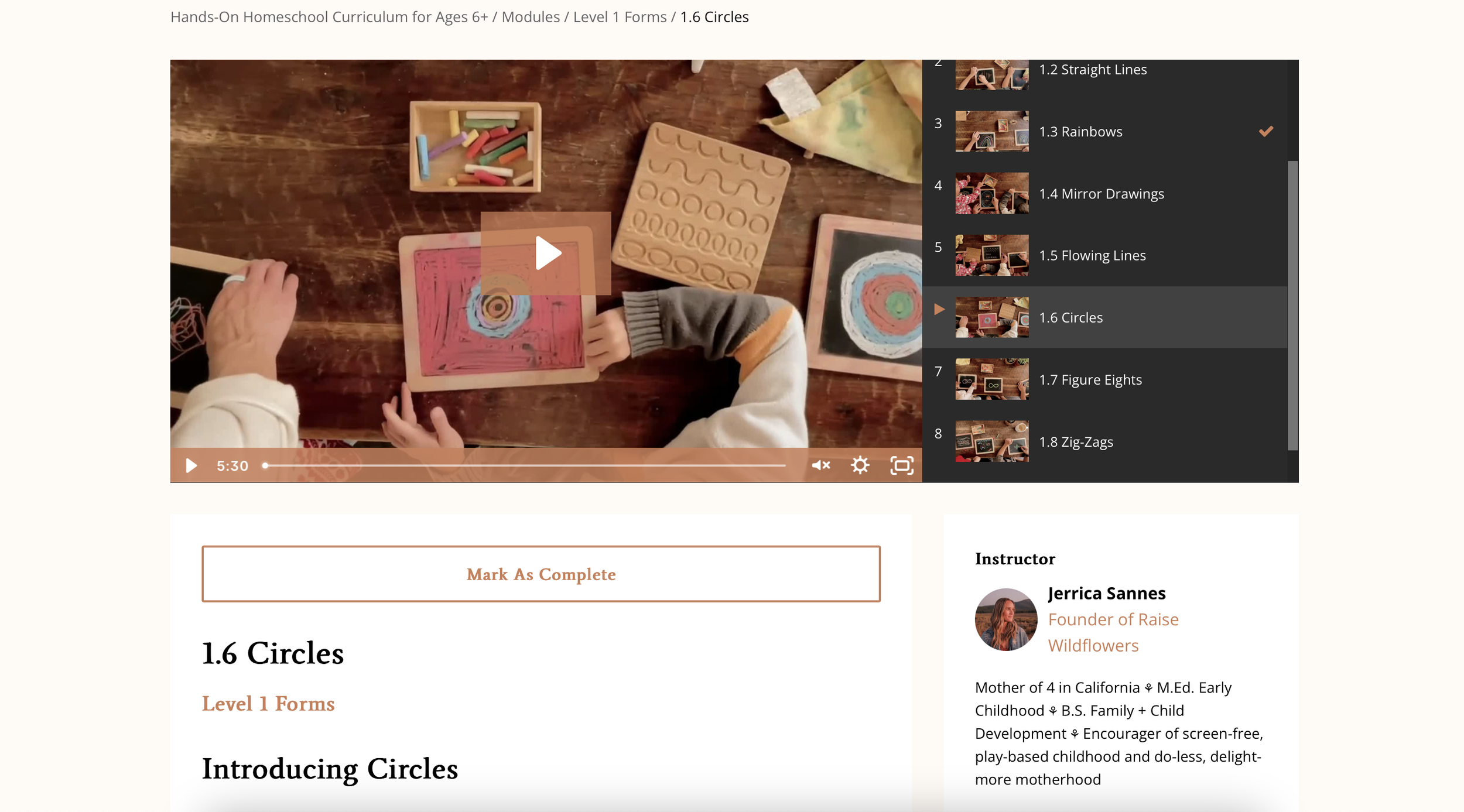
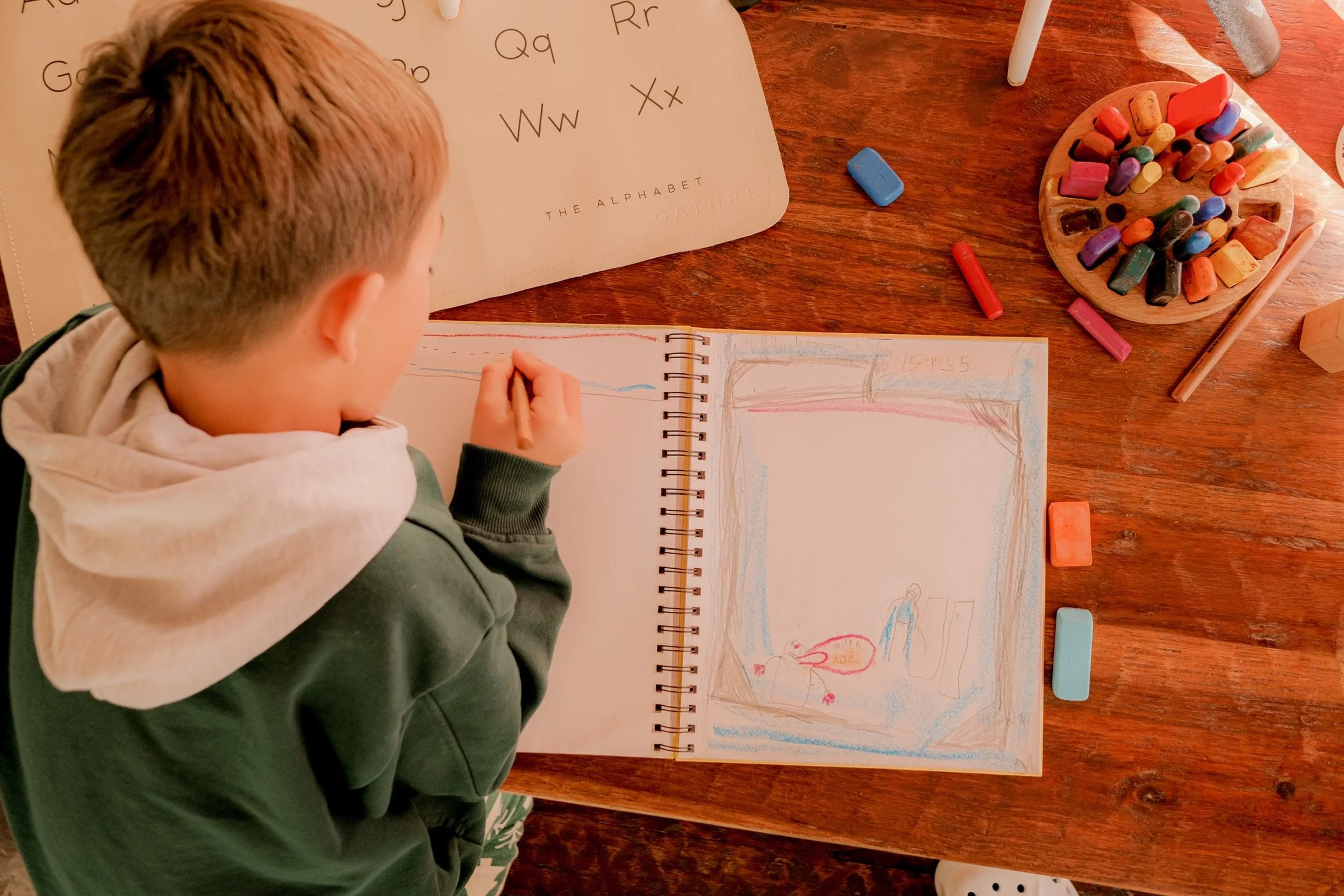
A simple, enjoyable, and beautiful Waldorf-inspired practice — form drawing supports penmanship, spatial awareness, hand-eye coordination, and so much more.
-
From print to cursive, your child will perfect their penmanship through this simple daily practice.
-
Carry your well-established reading routines over from Homeschool Basics, anchoring your curriculum in literature and eventually adding independent reading practice for your budding reader.
-
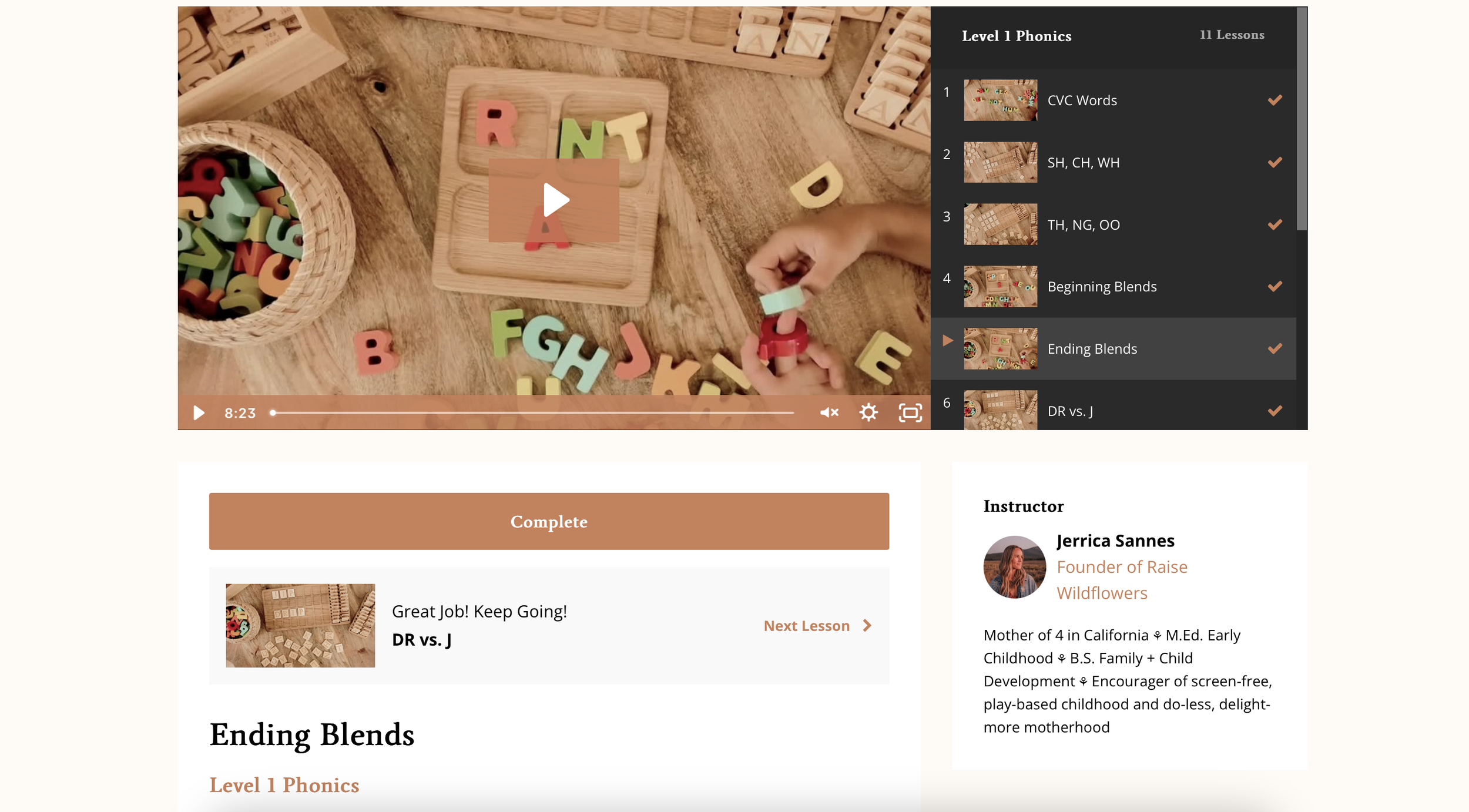
From the alphabet to the schwa, cement your child’s reading foundation in detailed, science-backed, Waldorf-inspired phonics lessons — carefully organized to be taught by grade level, but flexible enough to be moved through at whichever pace suits your child and your family best.
-
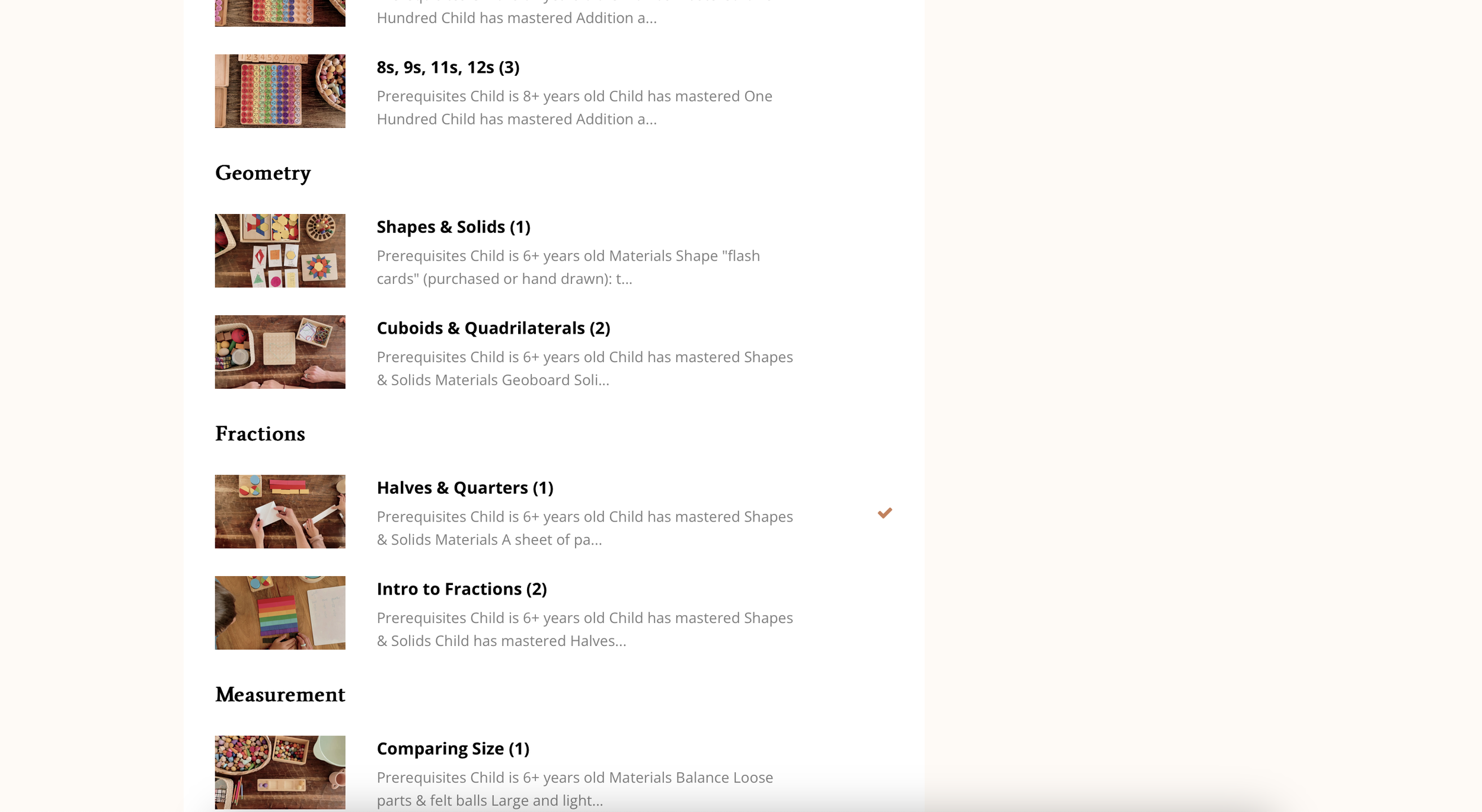
Real standard-aligned math lessons taught with manipulatives.
Read the lesson
Watch the video example
Gather materials
Teach the lesson, keeping the in-app written instructions handy for reminders
Rotate through practice ideas until the math concept becomes a piece of cake
Move on to a new lesson
Thoughtfully arranged to allow your child to focus on a single math interest for as long as they like.
-
Teach grammar rules through memorable stories, then practice grammar, spelling, writing composition, and proof-reading through a low-stress weekly writing routine — ranging from a 5-word drawing caption to a 5-paragraph opinion piece.
number sense
⚘
operations
⚘
measurement
⚘
geometry
⚘
science
⚘
history
⚘
social studies
⚘
number sense ⚘ operations ⚘ measurement ⚘ geometry ⚘ science ⚘ history ⚘ social studies ⚘
reading
⚘
writing
⚘
grammar
⚘
comprehension
⚘
cursive
⚘
penmanship
⚘
composition
⚘
speaking and listening
⚘
composition
⚘
language
⚘
vocabulary
⚘
reading ⚘ writing ⚘ grammar ⚘ comprehension ⚘ cursive ⚘ penmanship ⚘ composition ⚘ speaking and listening ⚘ composition ⚘ language ⚘ vocabulary ⚘

Science & History
We firmly believe science, history, and social studies are best taught through real life experiences — think museums, farms, nature centers, and science experiments — and not through textbooks and lesson plans.
We currently offer topic guidance for grades K-2, as well as recommendations for beautiful and engaging educational books per topic. Our science, history, and social studies resource will be slowly added over the next few years.
The Nurture Wildflowers Difference
Delayed Reading & Writing
Did you know that a child’s hand isn’t physically ready for sustained writing until about age 7?
Also — since blood flow shifts slowly and naturally from a child’s right hemisphere to their left between ages 4 and 6, the young child’s brain isn’t mature enough to develop efficient reading strategies until around the 7 year mark.
When taught too early, even the most playful approaches encourage poor penmanship and right brain reading habits.
Nurture Wildflowers teaches children to read and write well, and at the appropriate age.
An Emergent Curriculum
Using boxed lesson plans and following preplanned topic units is one of the biggest mistakes in early childhood education.
Inspired by Reggio Emilia, we believe a young child’s curriculum should emerge from their current interests and meet them at their current stage of development.
In Nurture Wildflowers, you’ll learn how simple but meaningful changes can make the curriculum better suit your child’s needs and mesh with your family’s current season of life.
Not Open & Go, Intentionally
Around age 9, the brain undergoes some major rewiring, a phase Waldorf teachers have long referred to as ‘The Nine Year Change’ — here, children leave behind the dreaminess of early childhood and emerge with abstract reasoning abilities.
Good ‘open and go’ curricula are great for older children who have conquered The Nine Year Change and have successfully shifted from the vulnerable Learning to Read stage of education to the more independent Reading to Learn stage.
Until then, home education requires a human touch, and Nurture Wildflowers sets the stage for a beautiful change.
No Screens, No Workbooks
Research is clear that children retain more and comprehend better when screens are not involved and when the learning is hands-on.
Worksheets and apps make educating easier for adults, and education worse for children.
We believe children should be educated the hard way — slowly, carefully, without gimmicks.
Nurture Wildflowers is a screen-free, workbook-free homeschool curriculum for ages 2-9.
A peek inside Grades 1-3
-
![]()
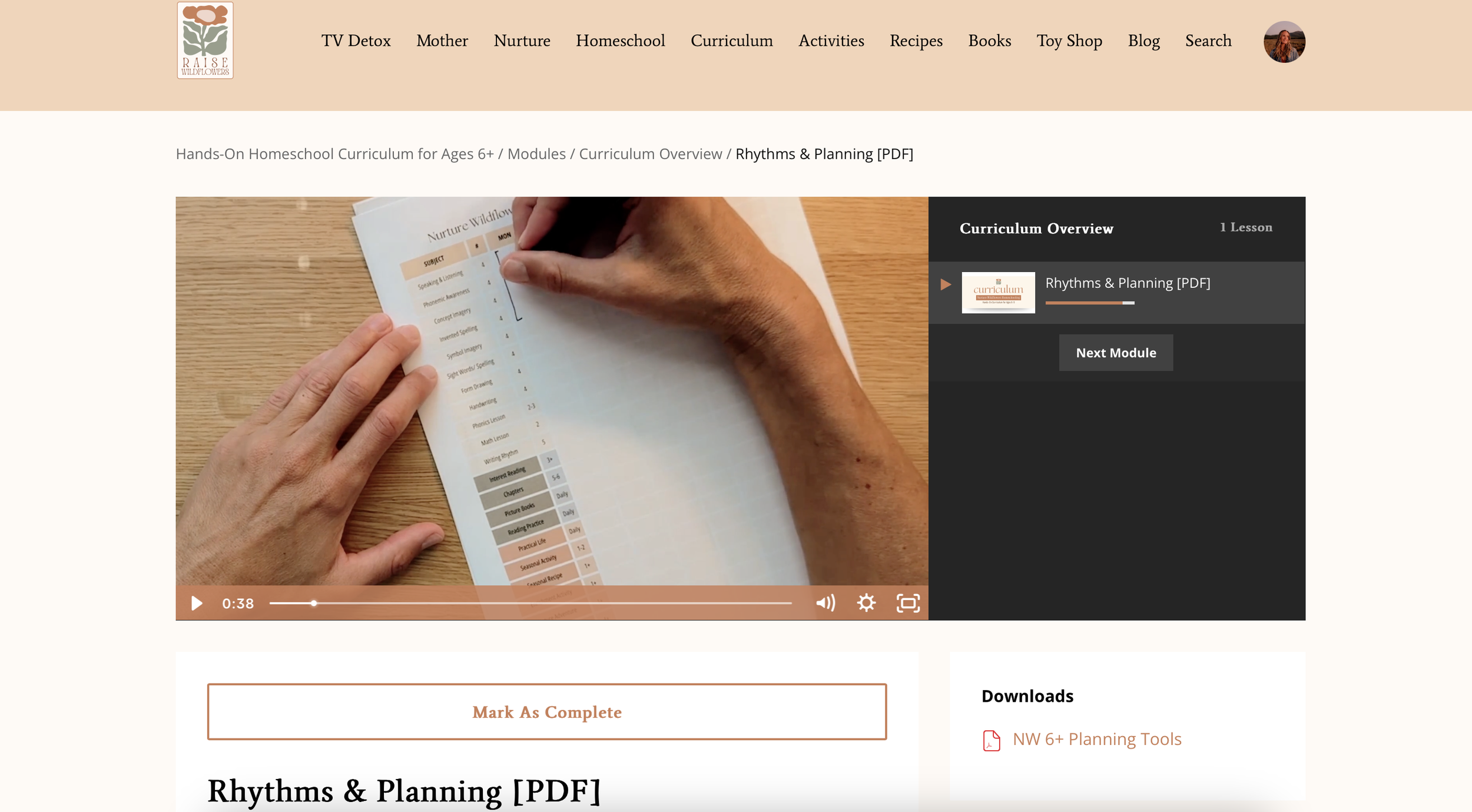
Curriculum Overview
-
![]()
Planning Tutorial
-
![]()
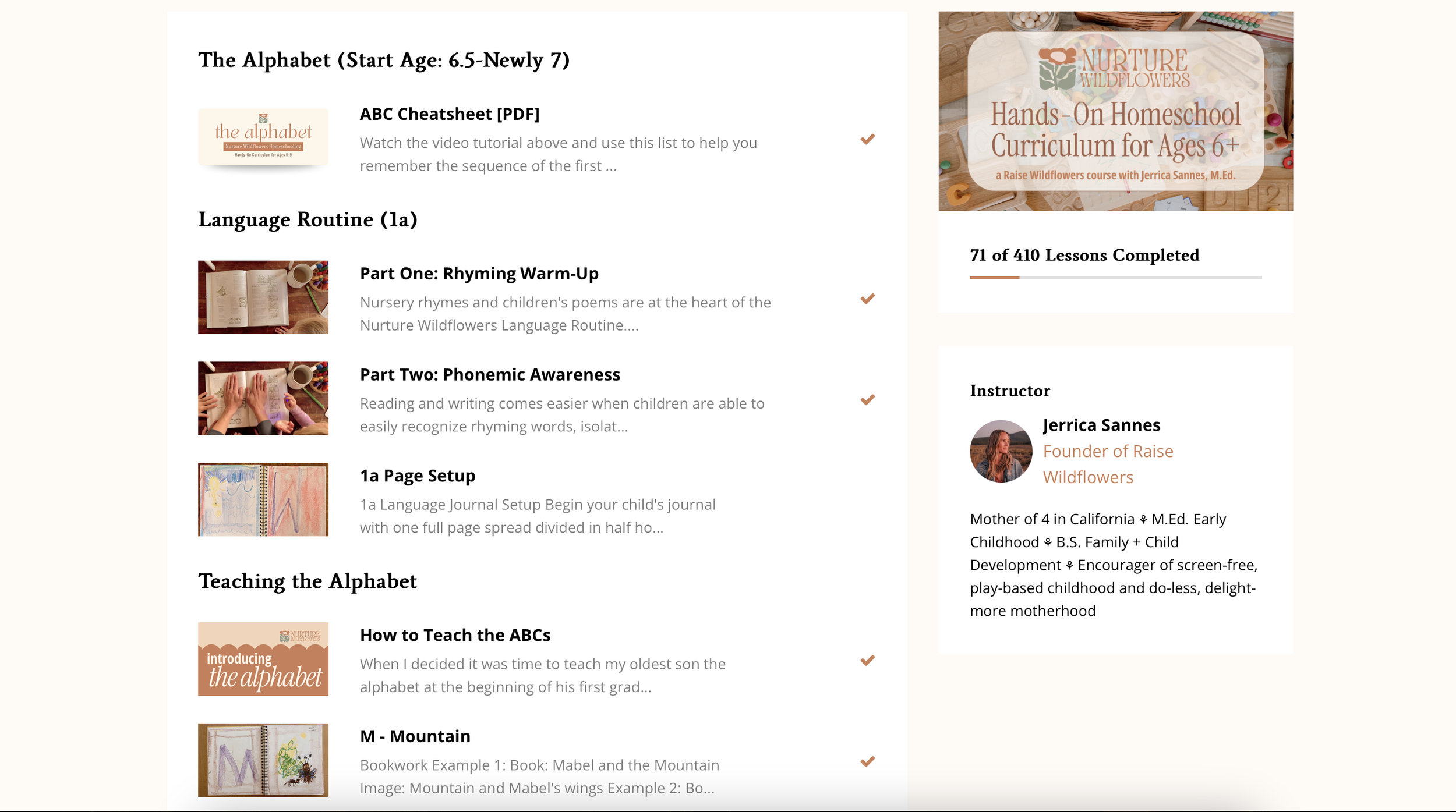
Teaching the Alphabet
-
![]()
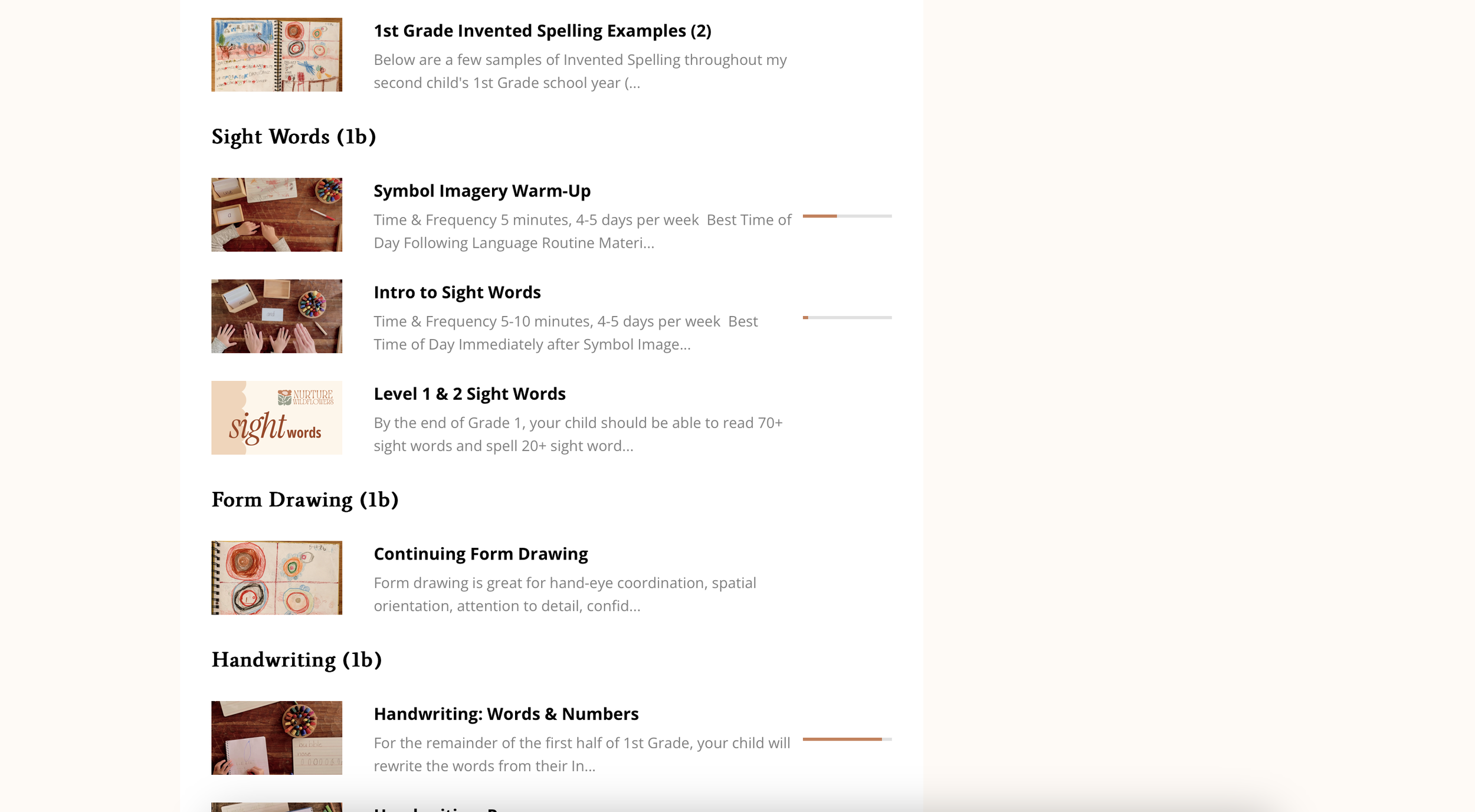
Grade 1
-
![]()
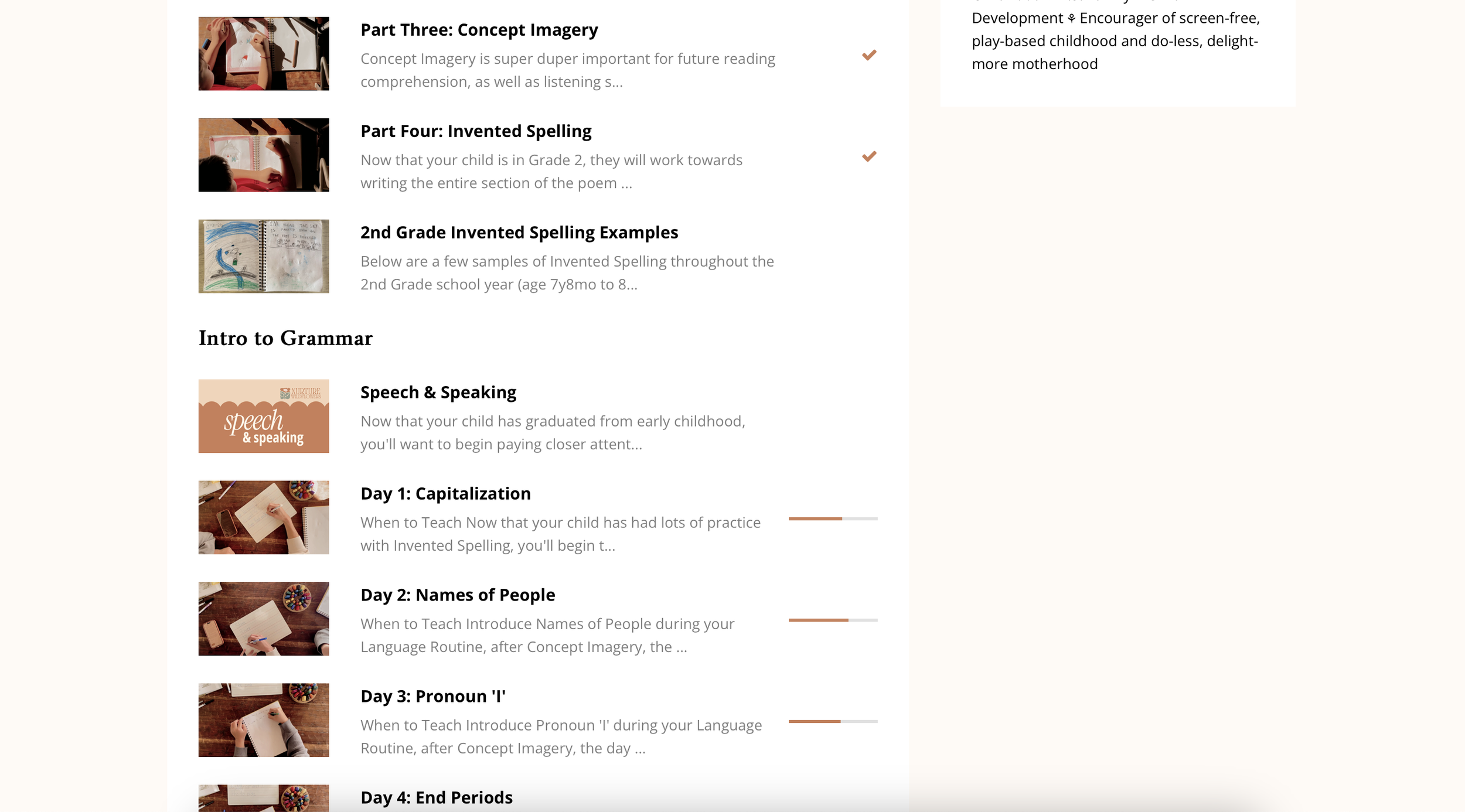
Grade 2
-
![]()
Grade 3
-
![]()
Child-Paced Math Lessons
-
![]()
Child-Paced Phonics Lessons
-
![]()
Form Drawing Demos
THE BEST OF ALL WORLDS
Waldorf - Steiner
Reggio Emilia
Charlotte Mason
Montessori
Meets US Common Core K-3 Math, Science, and Language Arts Standards — but at a more developmentally appropriate pace.
Reality Check
Can’t I just unschool?
Educating without a curriculum is risky! Reading, writing, and most math concepts require direct instruction. Nurture Wildflowers offers the flexibility of unschooling without sacrificing the quality of education.
Okay, but let’s make it gentle.
Sure! Just keep in mind that early elementary is the best age for establishing strong study habits as well as authority as your child’s teacher. Nurture Wildflowers sets high expectations for effort and participation while also remaining developmentally appropriate, truly.
Won’t they fall behind?
Temporarily, yes! Your child will intentionally remain academically “behind” their school-attending peers for a few years — giving their brain adequate time to mature, building a strong foundation for learning, and increasing their chance of surpassing peers by age 10.
So we’ll need to homeschool forever?
Not necessarily! We consider Nurture Wildflowers Level 3 (age 8-9) the “bridge” to whichever school option feels like the best fit for your family for 4th Grade and beyond— be that public, private, or alternative.
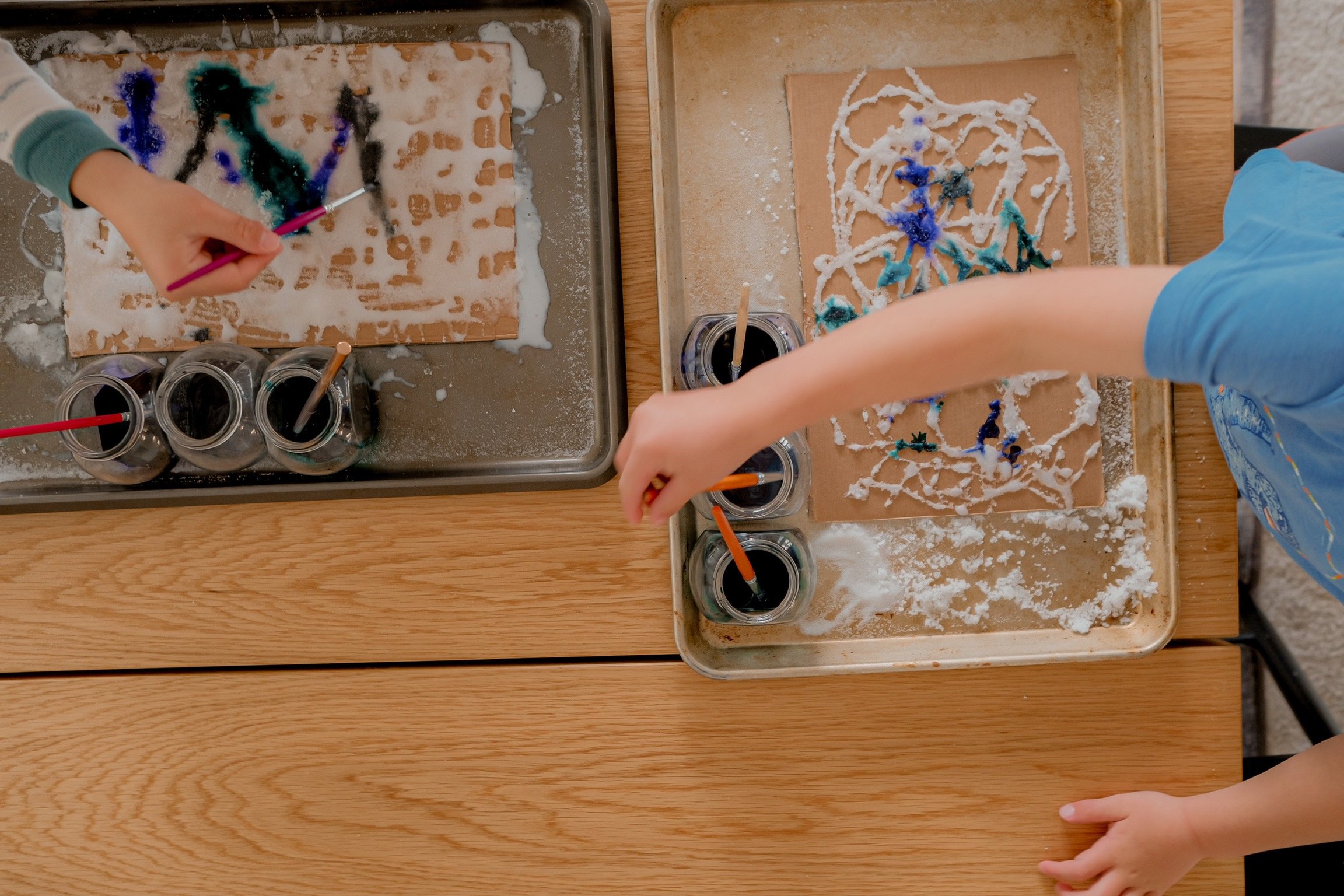
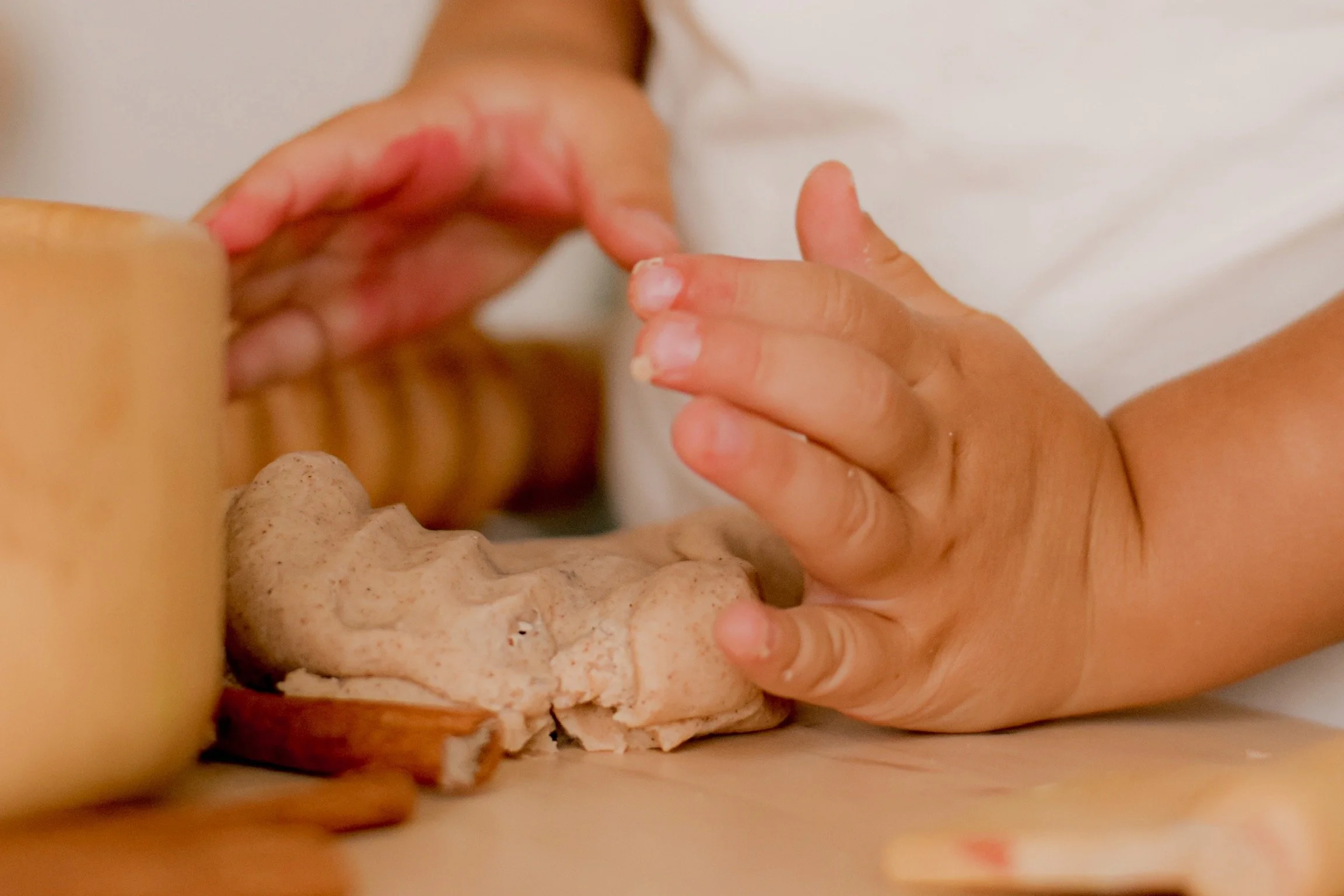
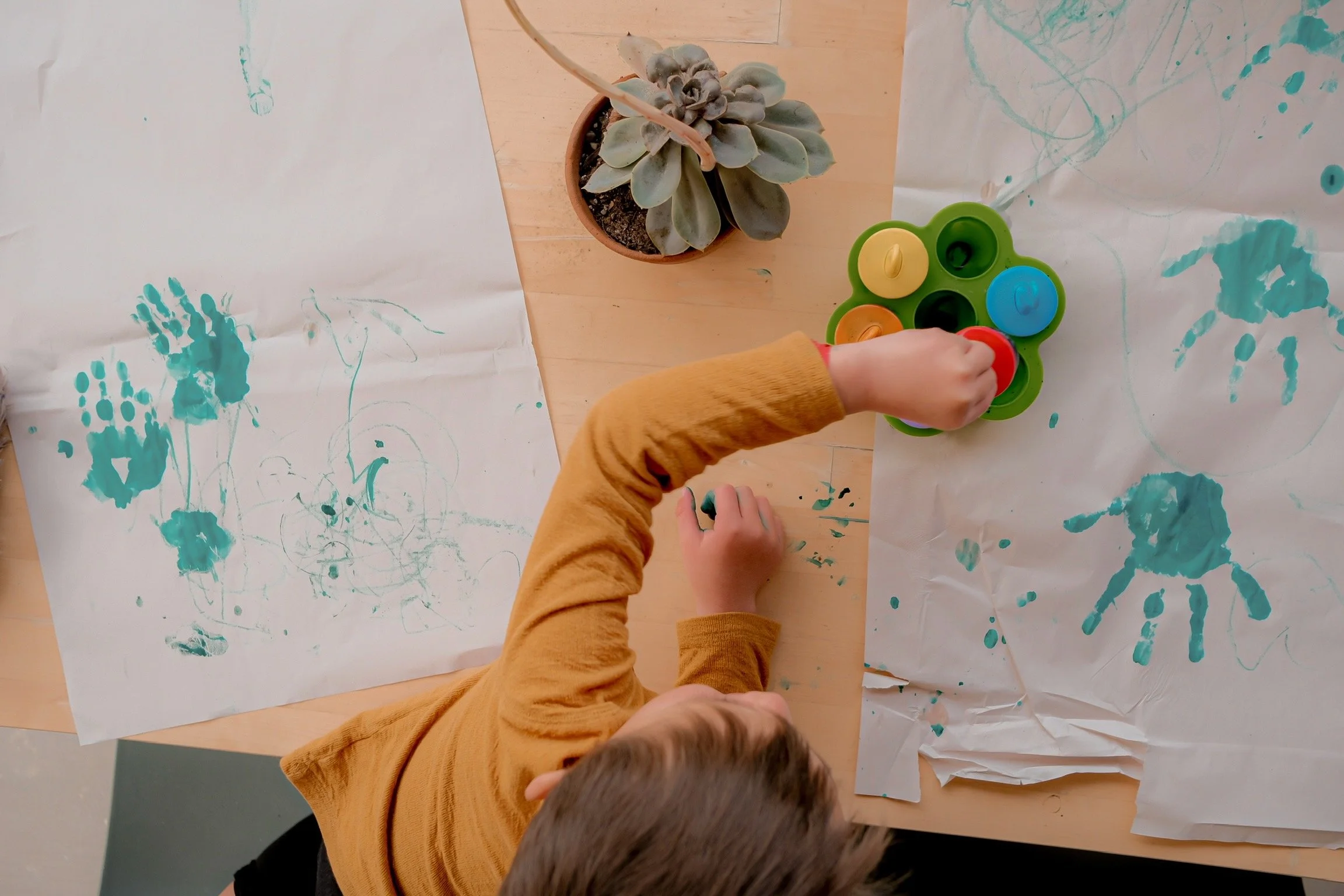
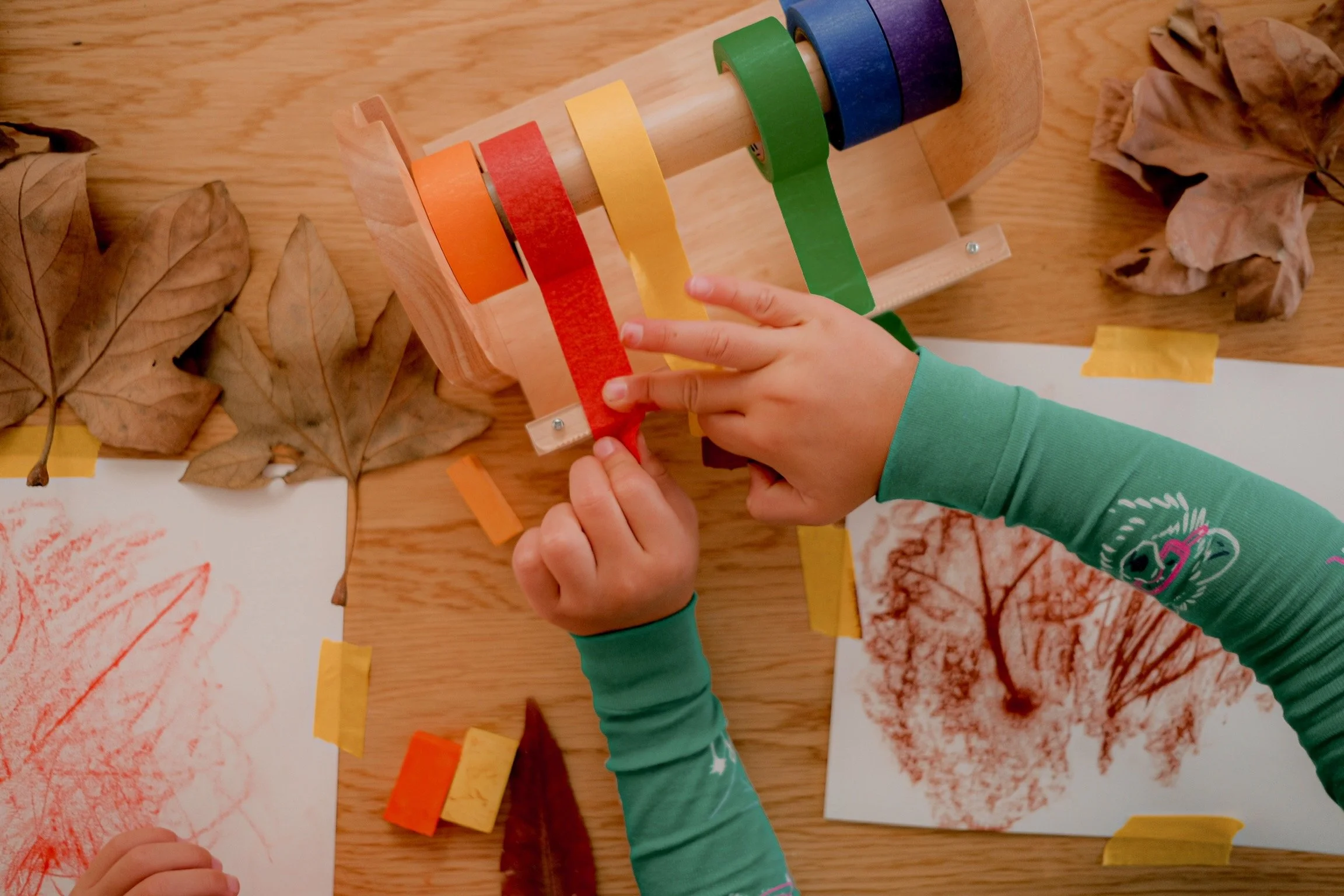
Nurture Wildflowers is not for you if…
You want a generic, age-based, boxed curriculum
You want your child to follow a workbook instead of make one
You’re looking for “fun” learning games and activities
You want your 2-6 year old to learn to read and write
The Resource for Ages 2-6
-
![]()
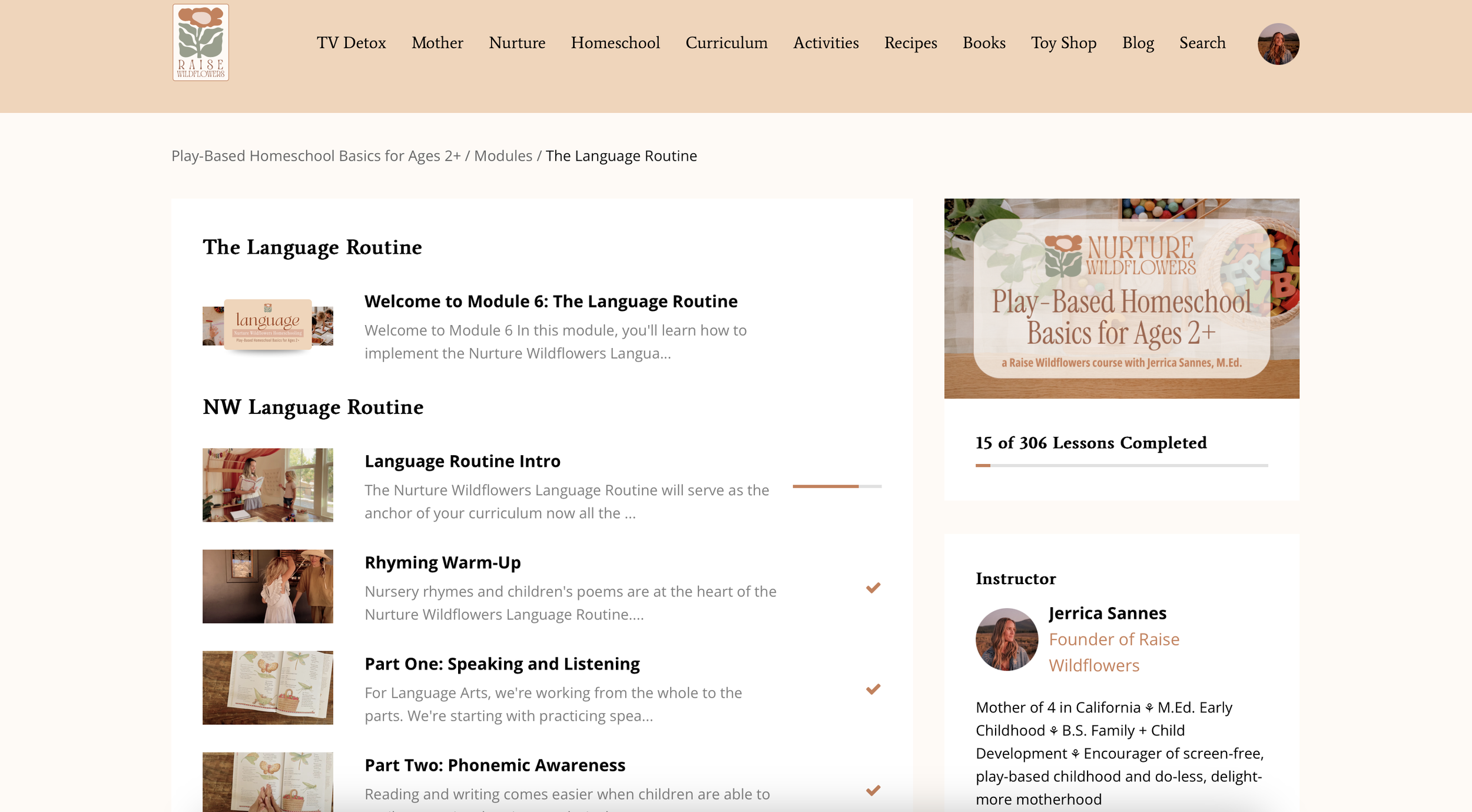
The NW Language Routine
-
![]()
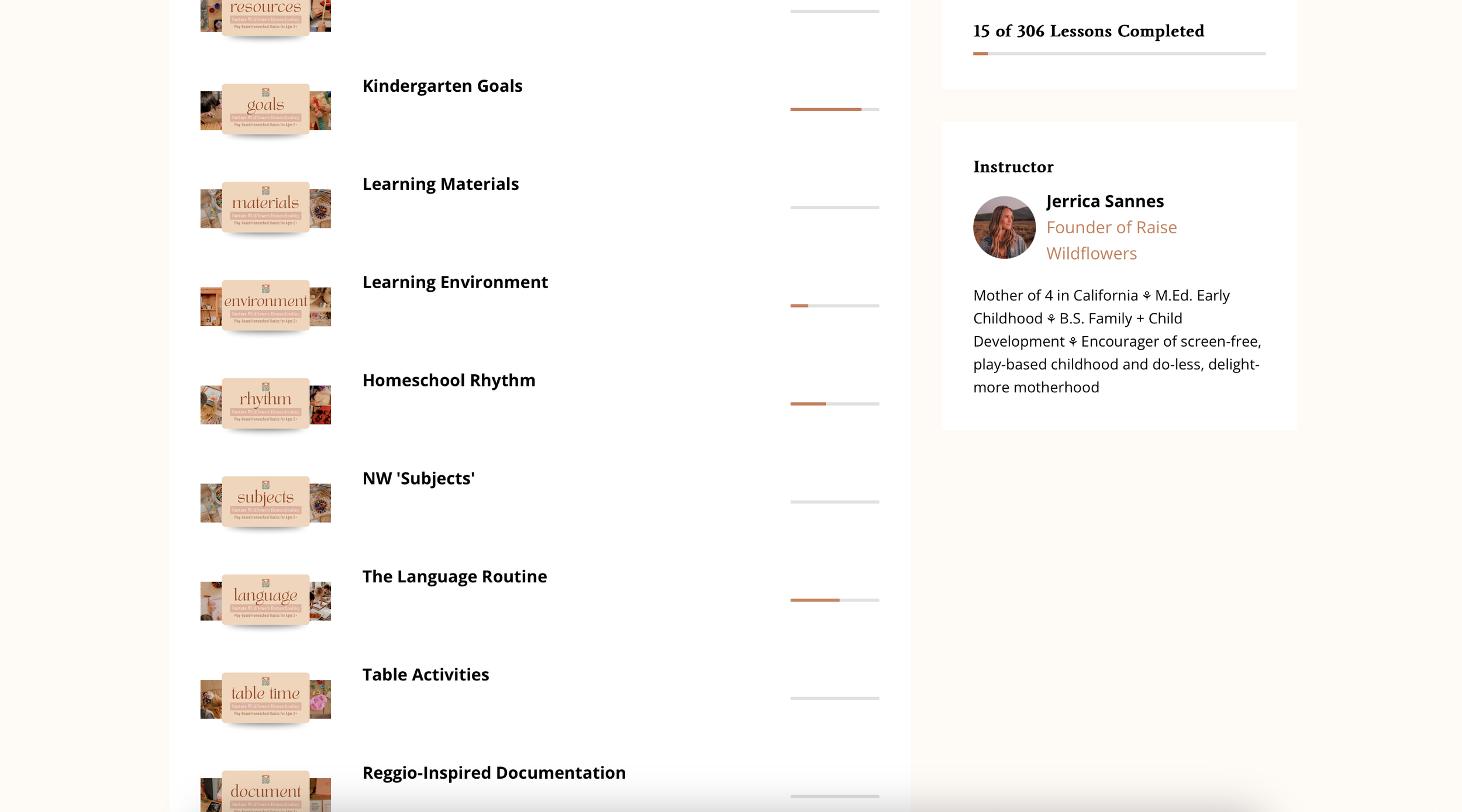
Materials, Subjects, Rhythm & More!
-
![]()
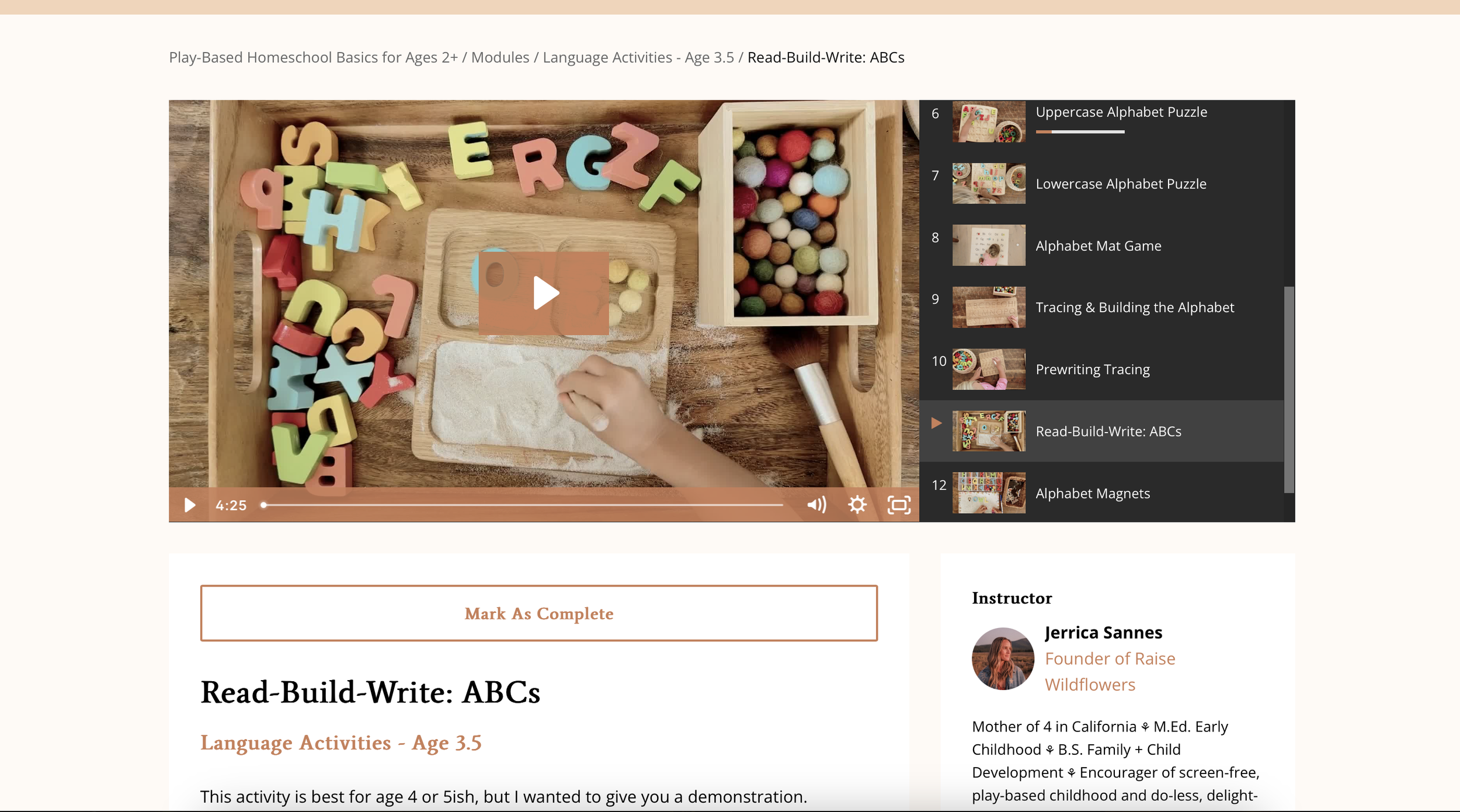
Child-Led Language Arts
-
![]()
Child-Led Mathematics
-
![]()
Reggio-Inspired Documentation
-
![]()
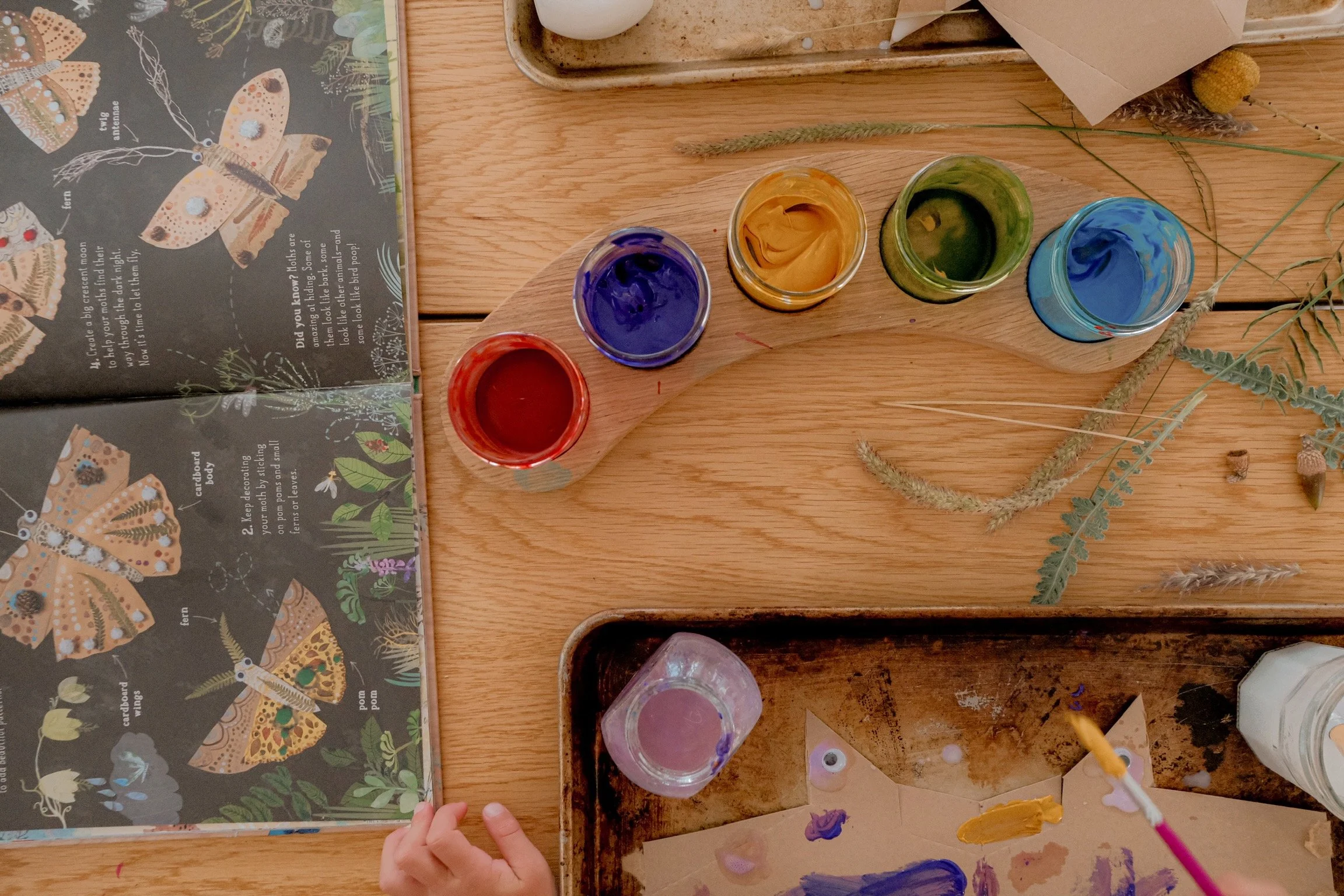
Invitations to Create
-
![]()
Seasonal Recipes
-
![]()
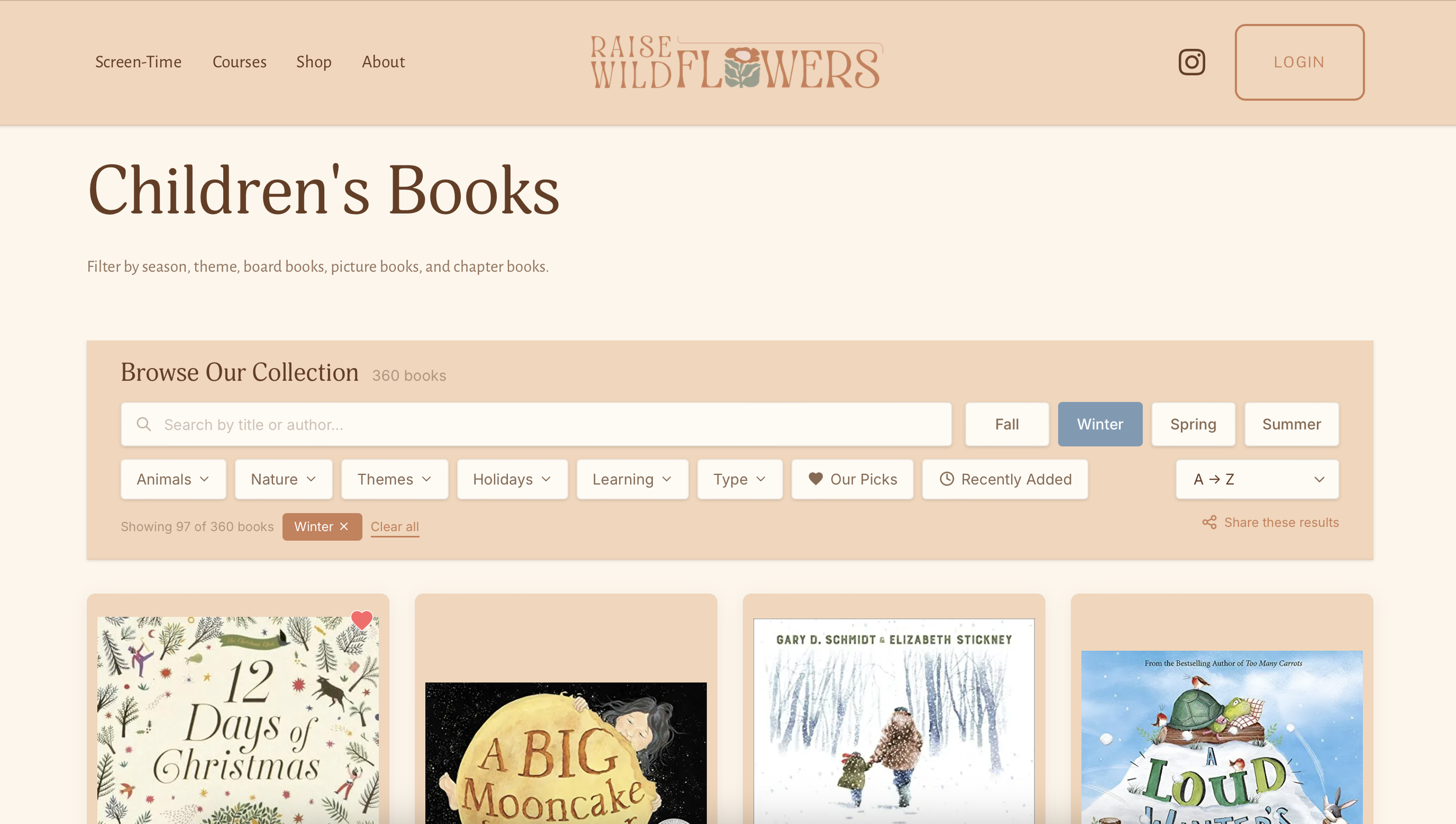
Book Shop
-
![]()
Leveled Read Aloud List
-
![]()
NW Learning Journals
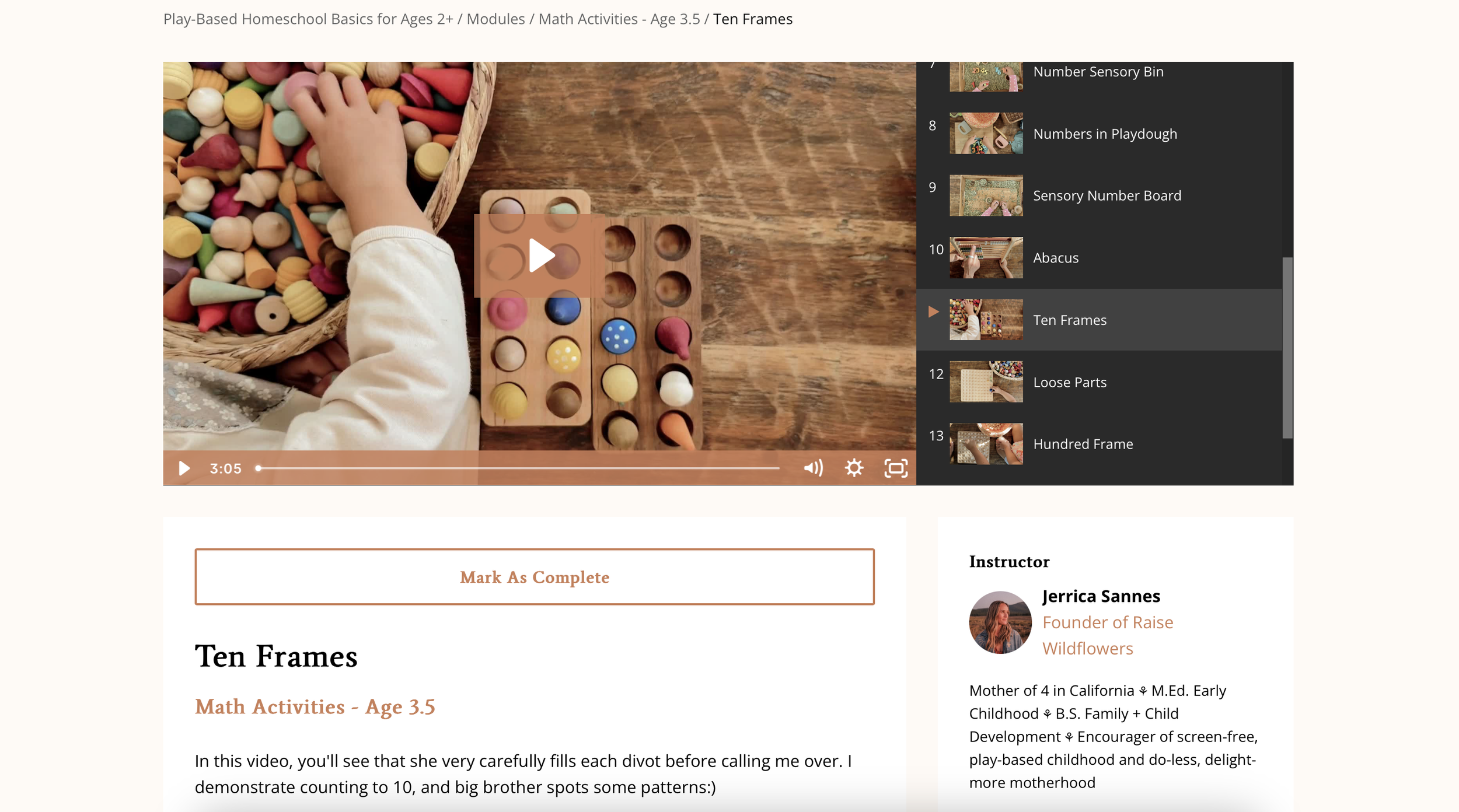
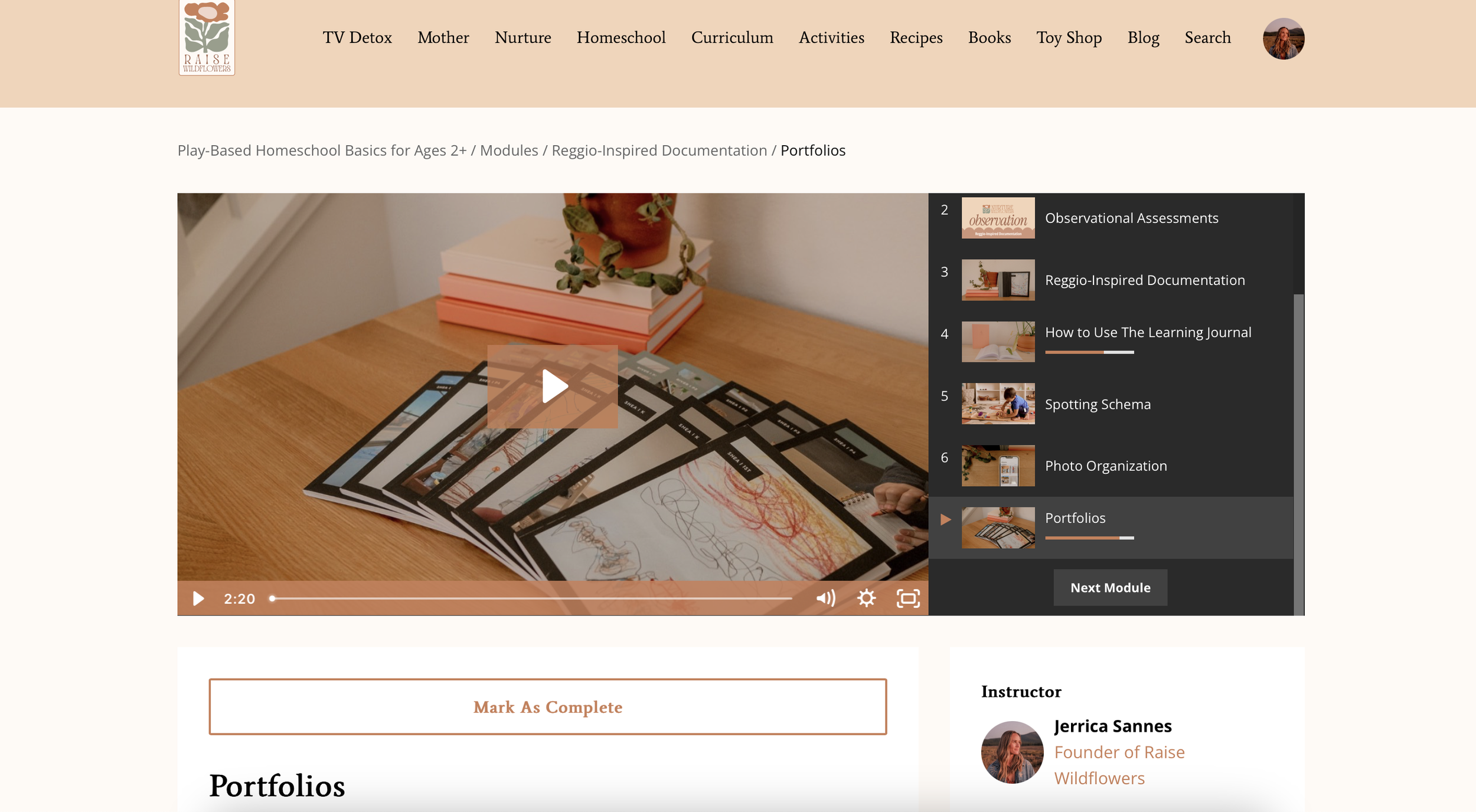
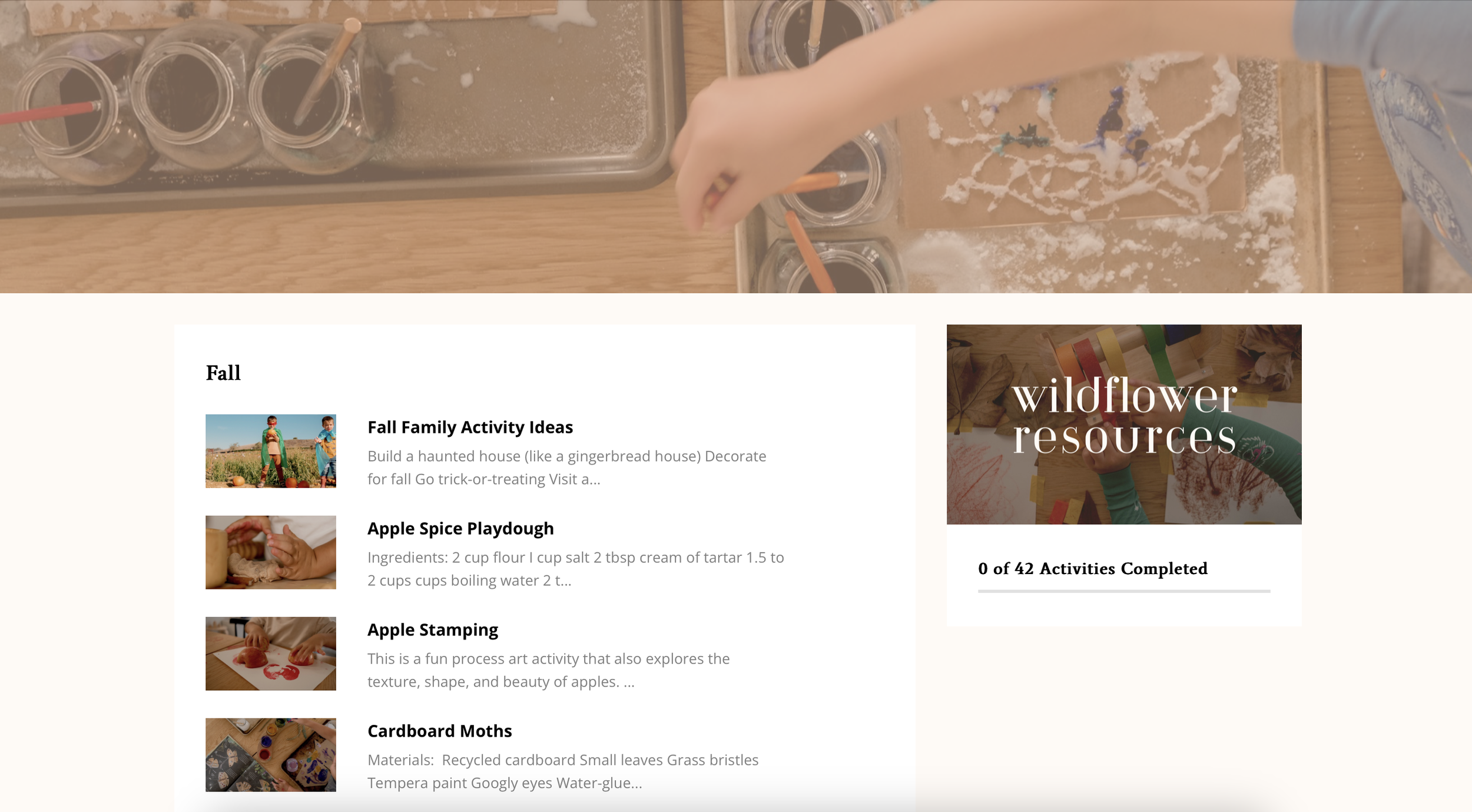
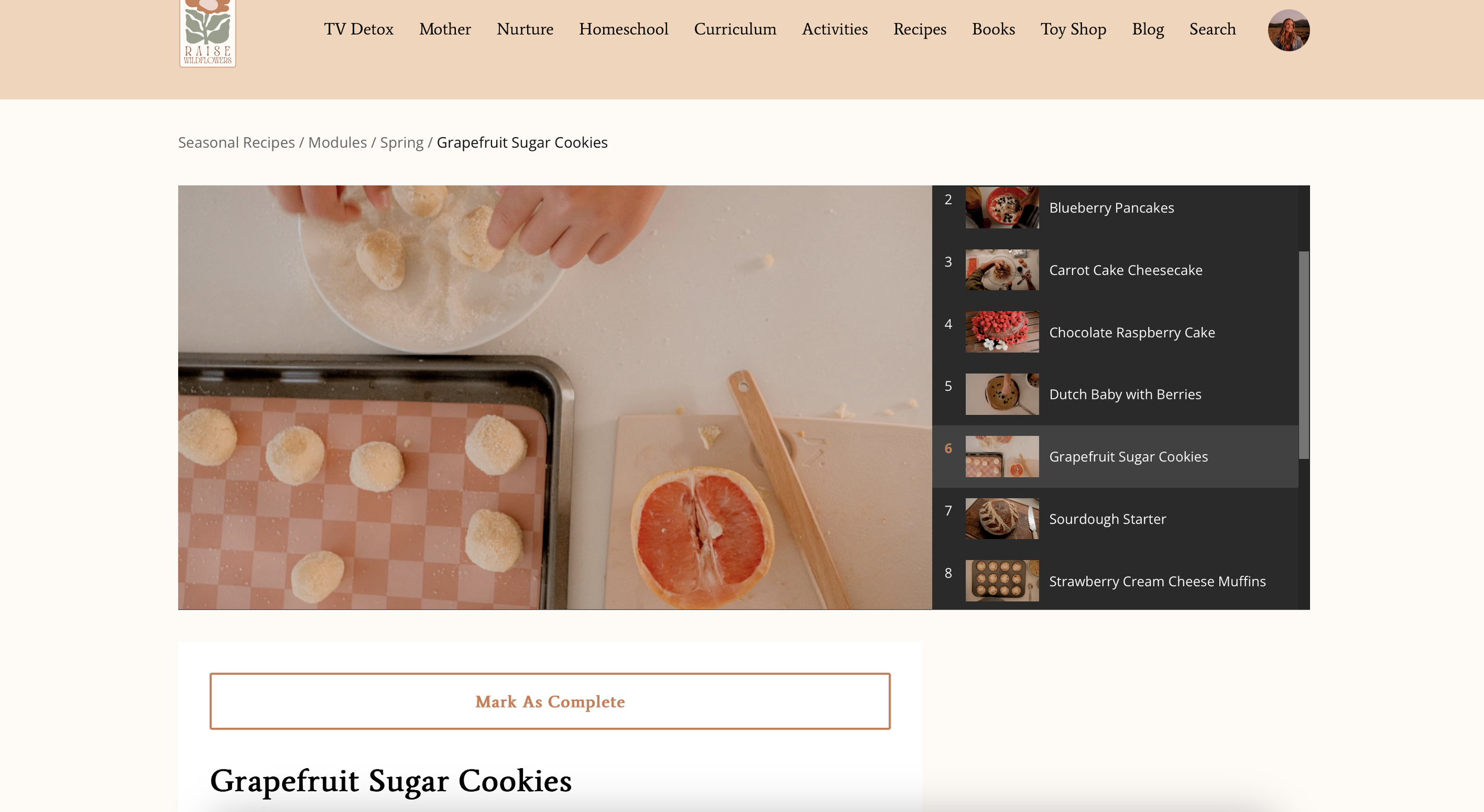
Why start in toddlerhood… can’t they just play?
Yes, and for the most part, they will! Beginning Nurture Wildflowers between ages 2 and 4 will give your little one a jumpstart in language as you introduce rhymes and poems, engage in phonemic awareness exercises, practice concept imagery, and embrace reading routines.
Joining in early childhood gives you the gift of time— time to learn, time to collect beautiful materials, time to practice your rhythms and routines, time to enjoy your young child without worrying about their learning and development.
Perhaps most importantly
You’ll learn how to avoid common early learning mistakes and set your child’s education off on the right path.
500+ Families
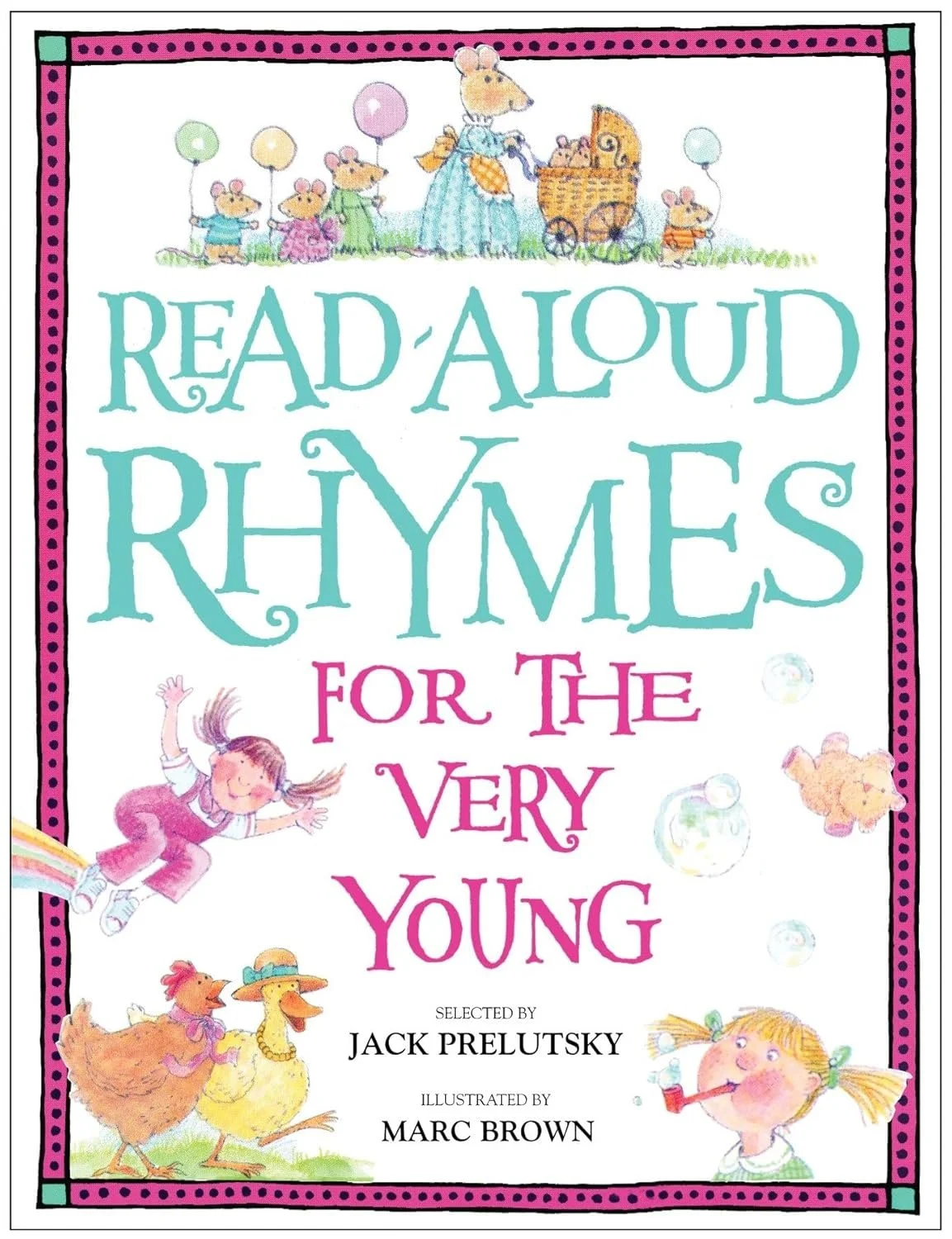
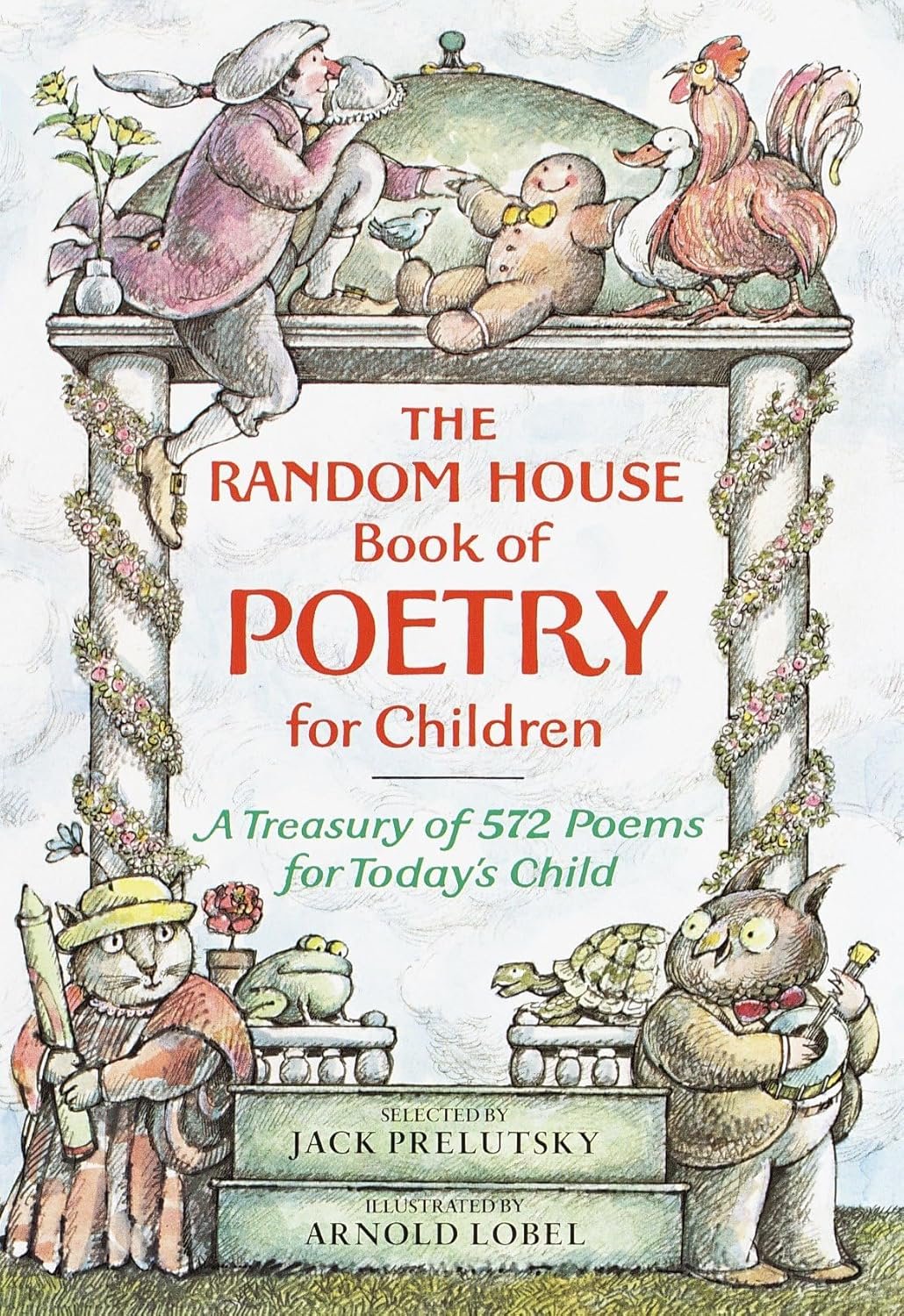
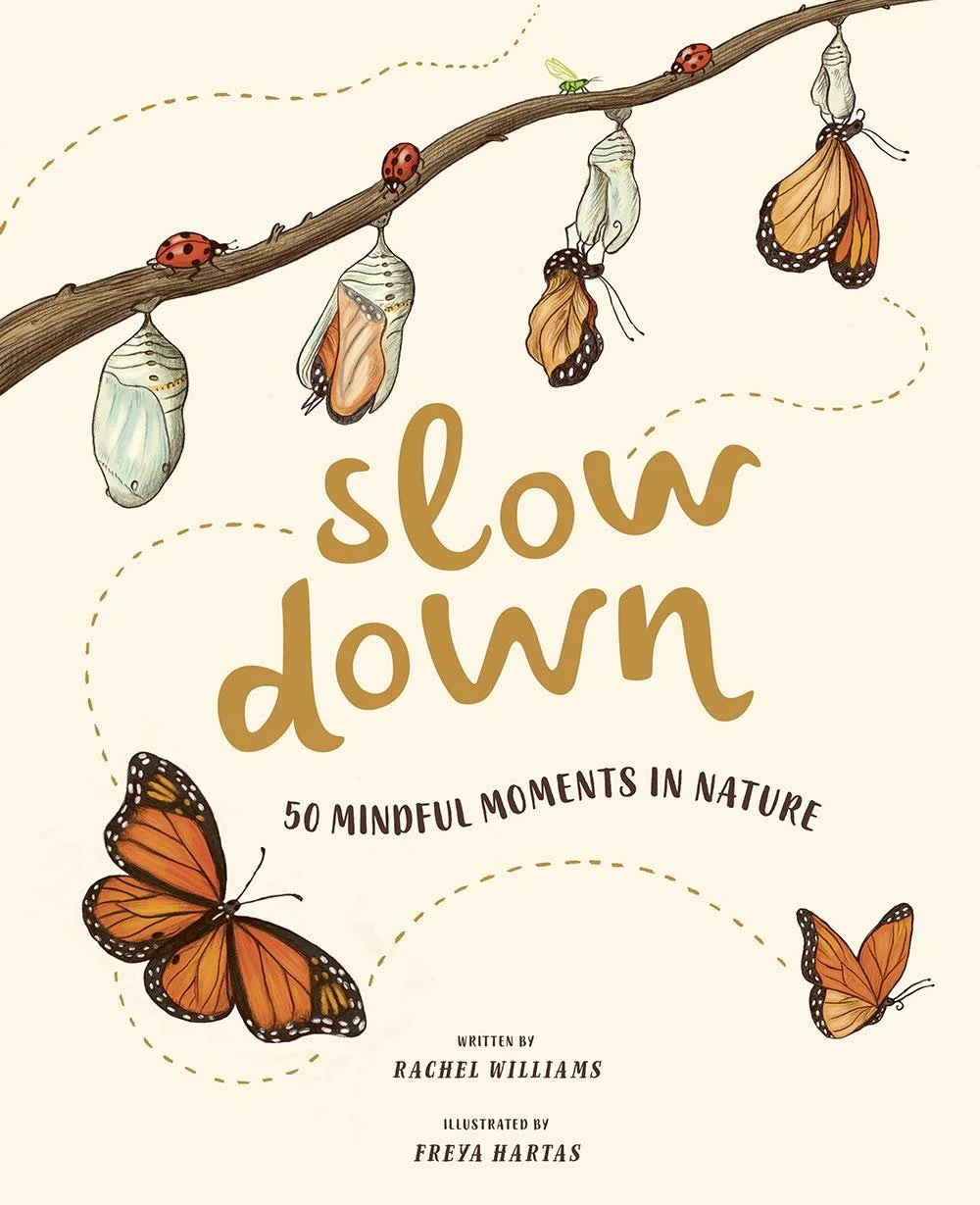
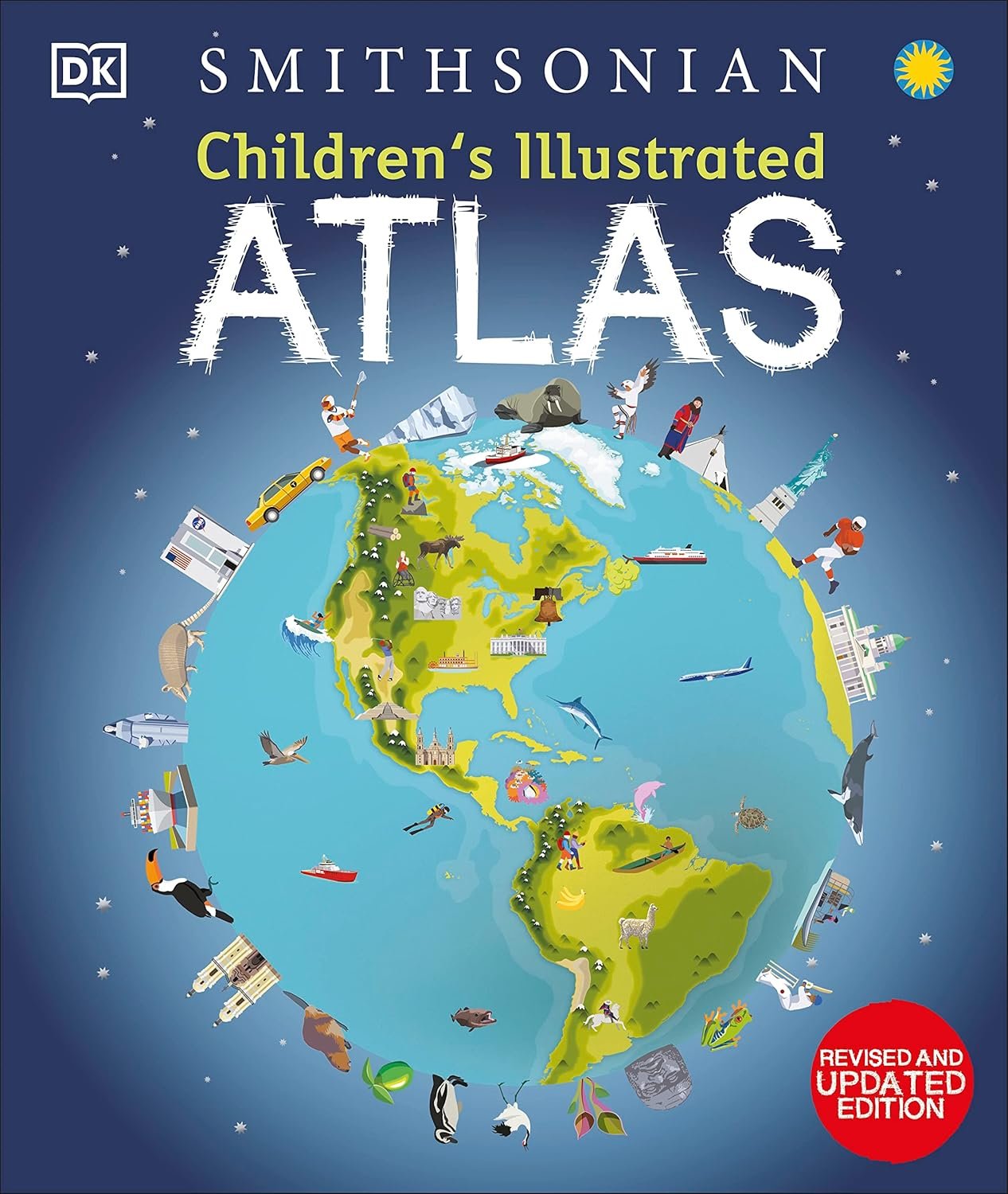
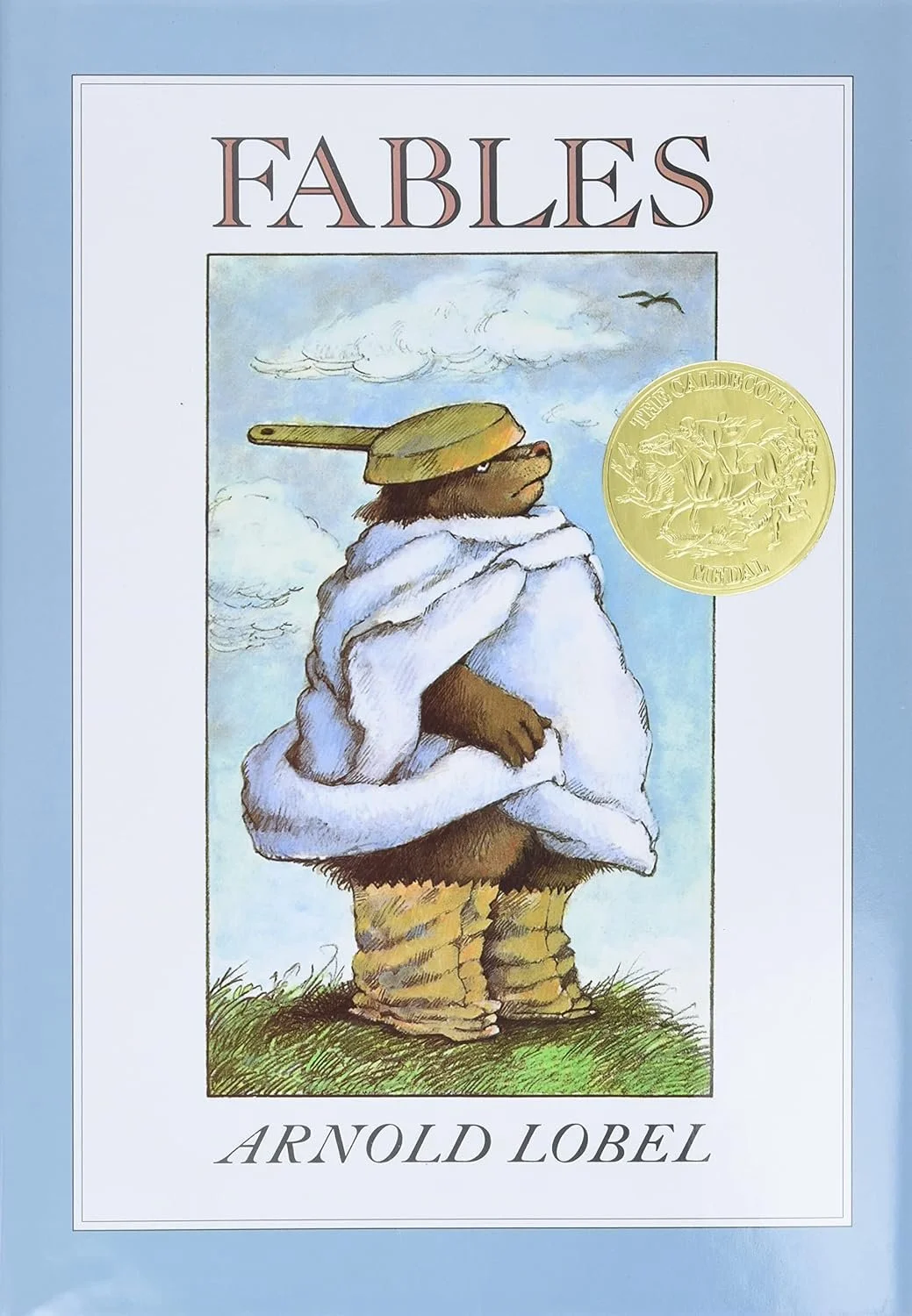
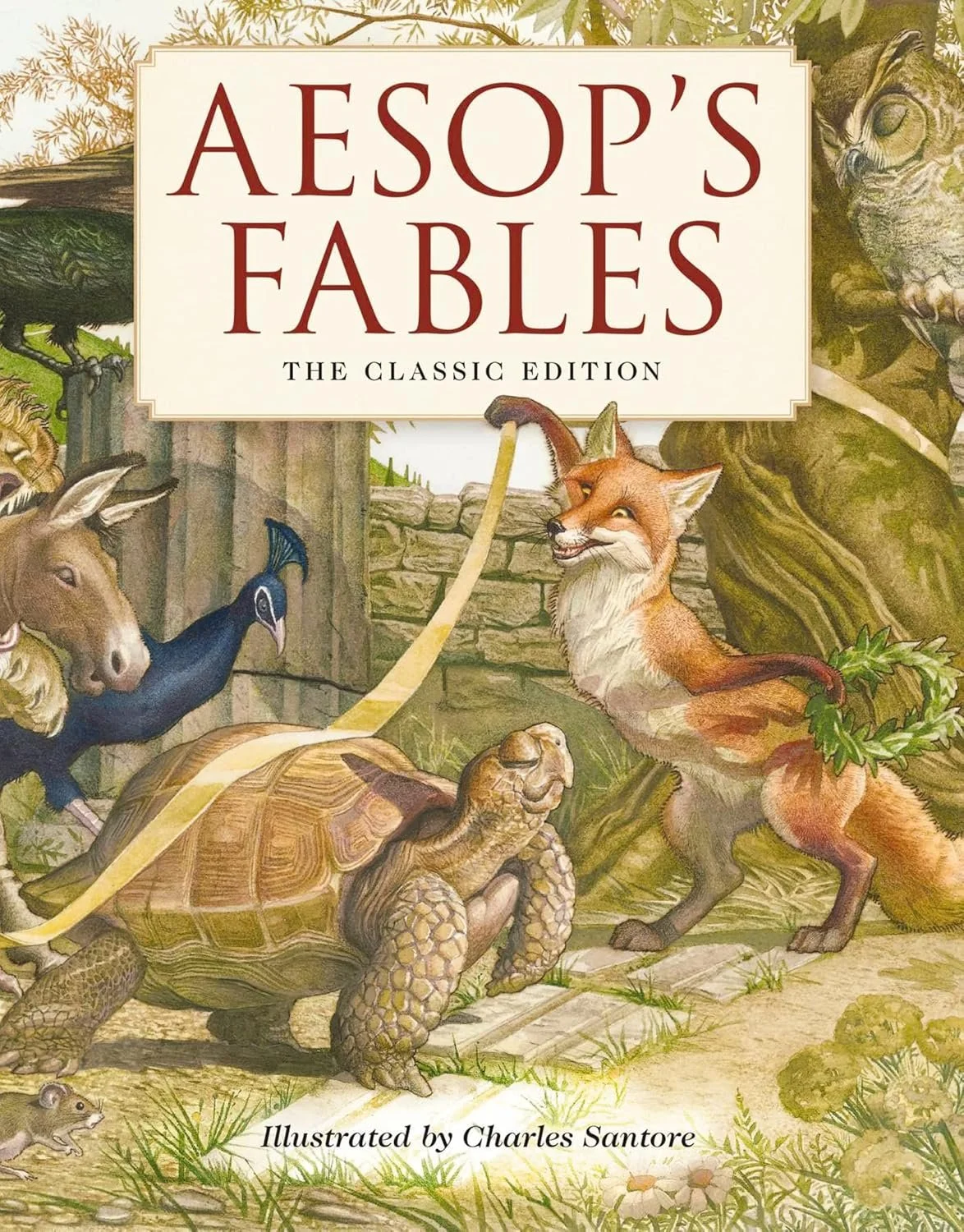
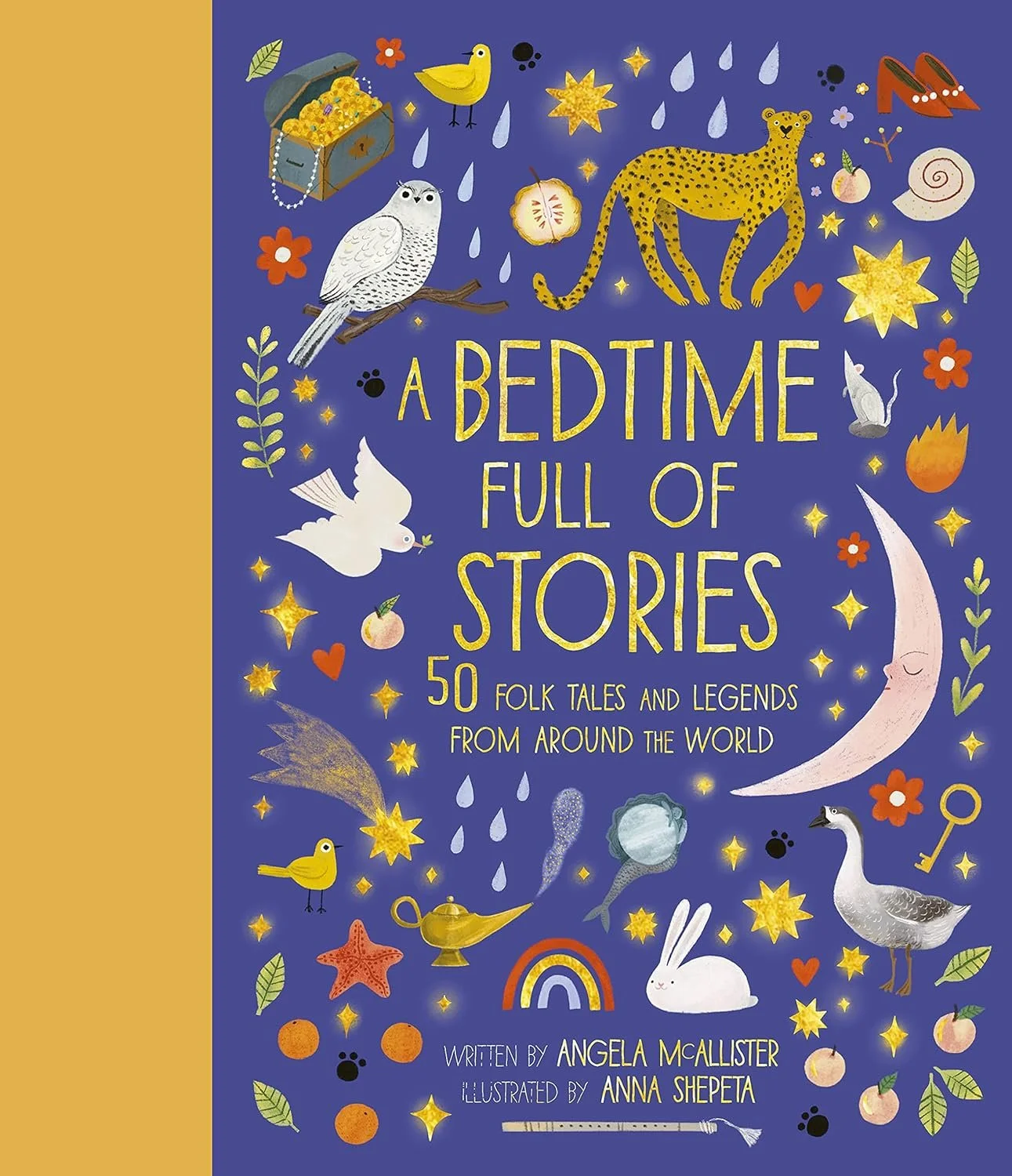
Our Core Curriculum Books
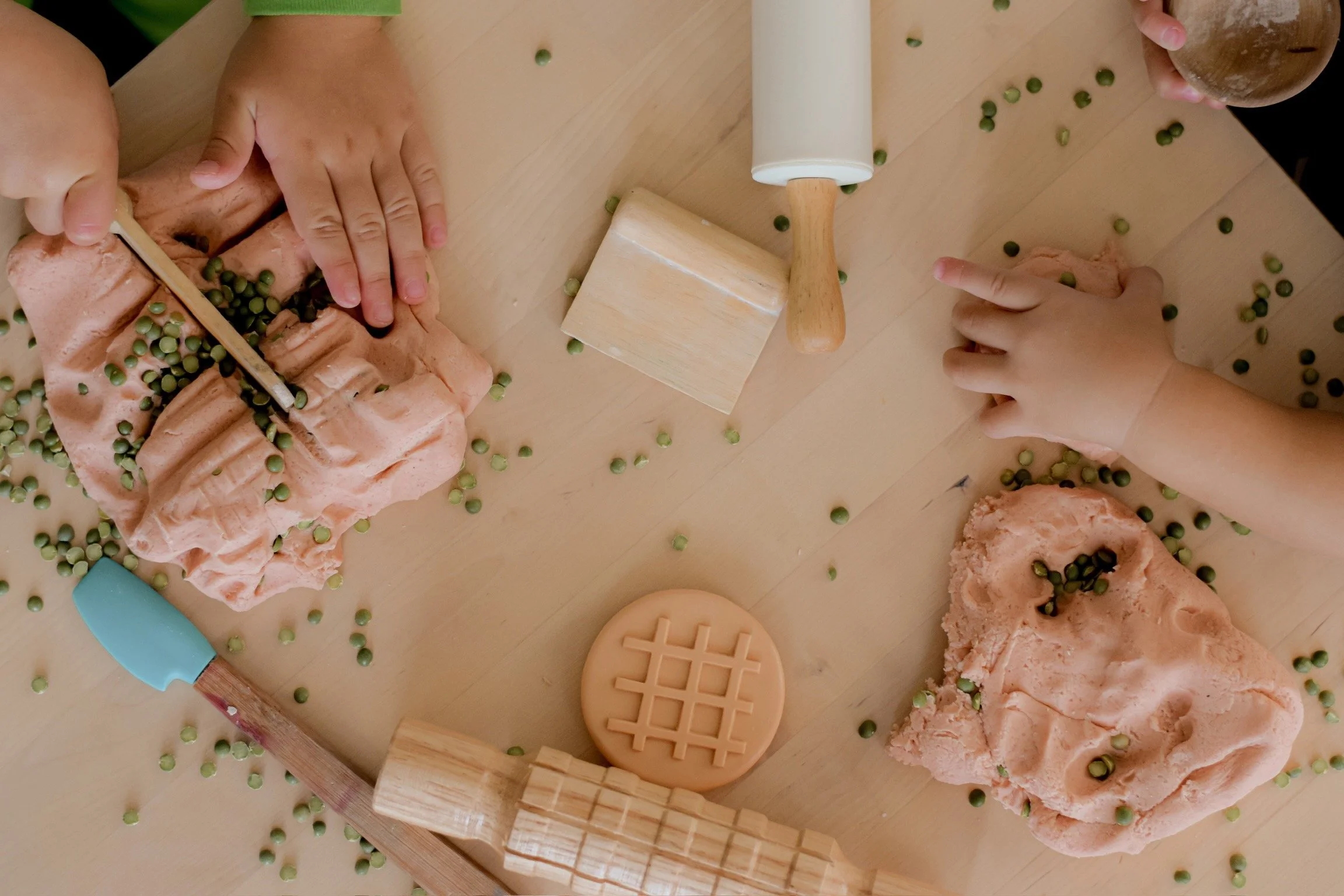
a day in the life
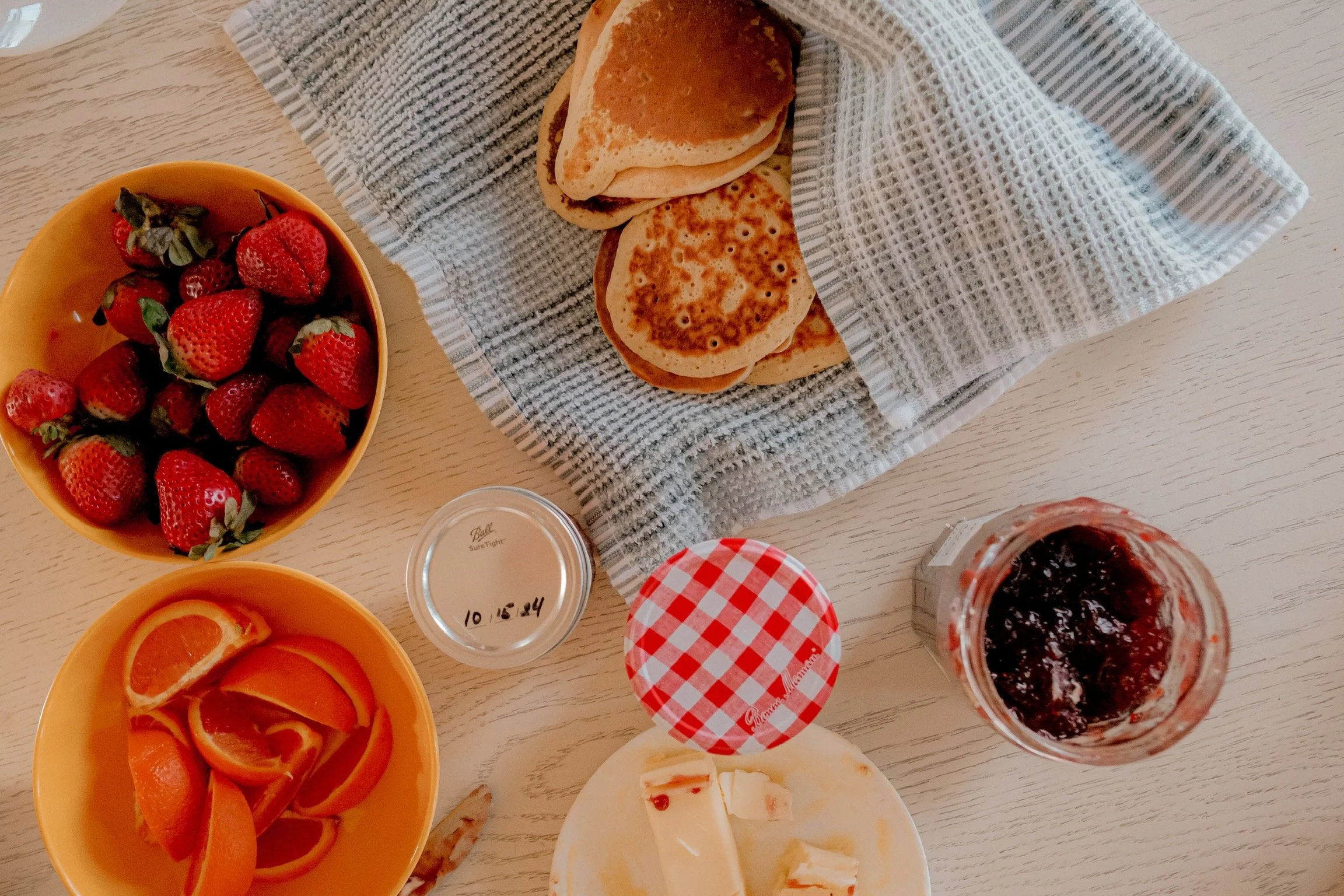

Breakfast & Morning Routine
Begin your day slowly with a hot breakfast, then spend 30-60 minutes on your morning homeschool routine.
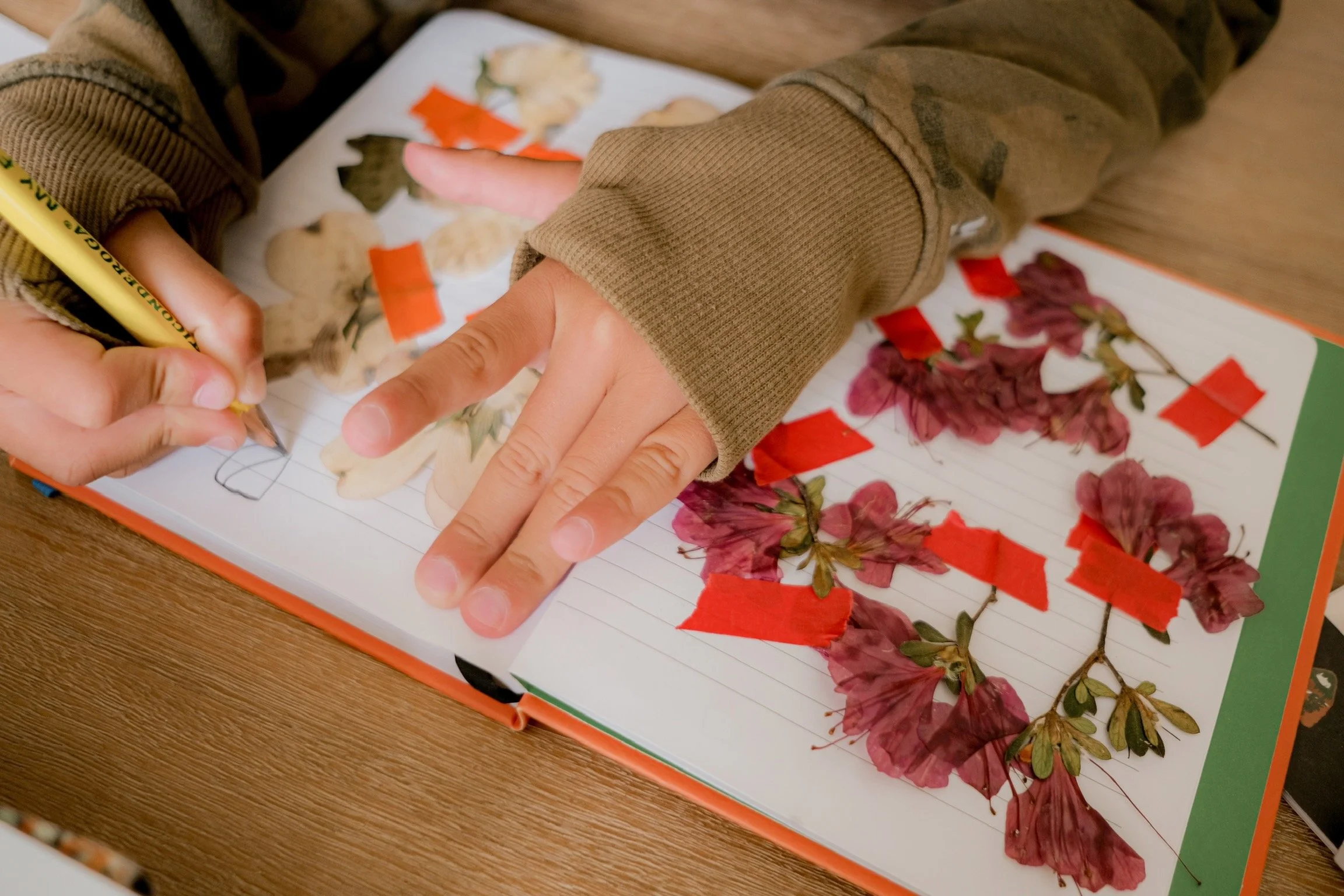
AM Snack & Enrichment
Pack a snack and head out on a morning adventure — or simply enjoy some baking, an activity, or free play time at home.
Lunch, Reading & Writing
Refuel and recenter with lunch and some midday reading, then wrap up the homeschool day with a writing lesson.
PM Snack & Outdoor Play
Re-balance blood sugar levels with a small snack, then head out (or send the kids out) for some unstructured outdoor play time.
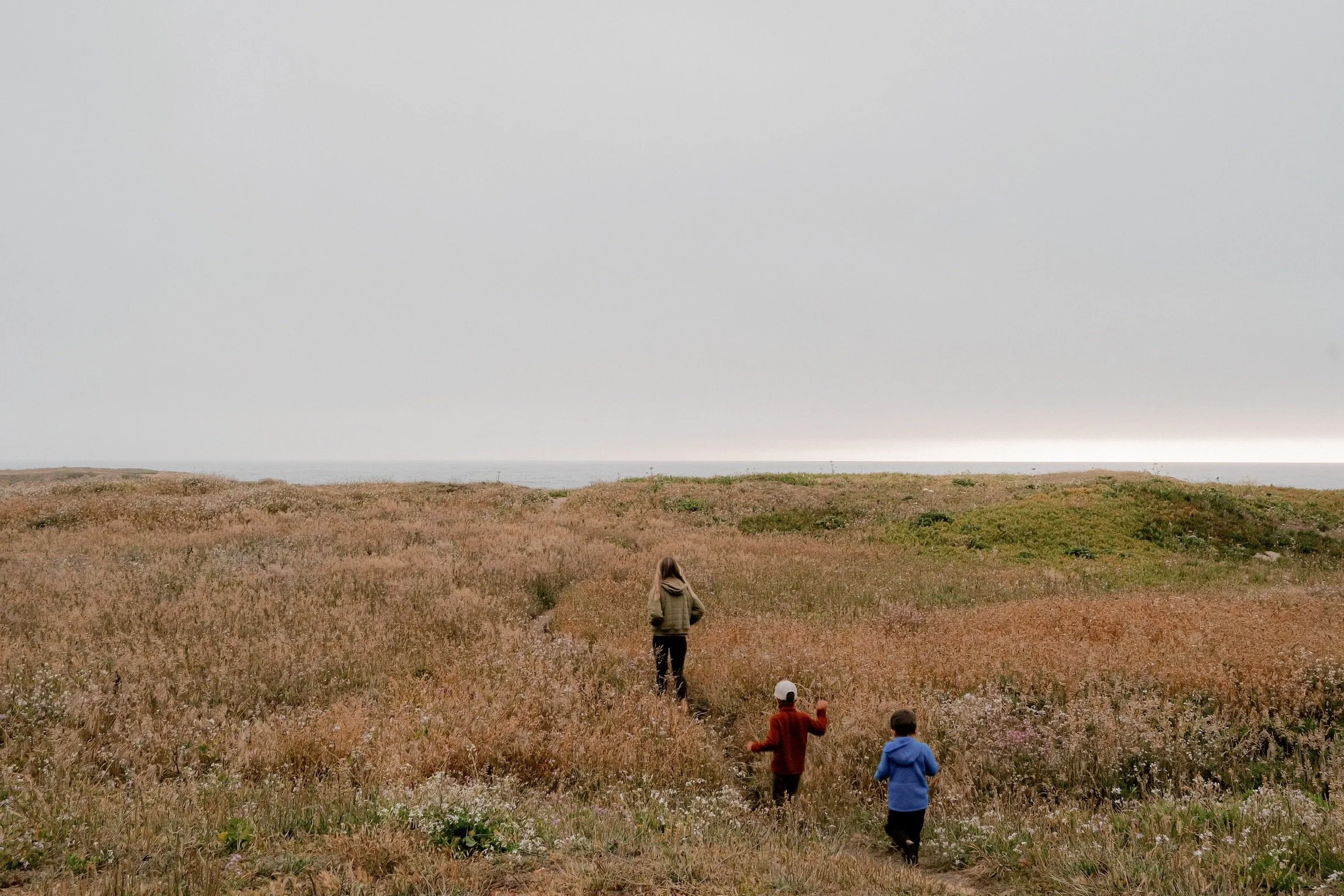
This isn’t just a curriculum — it’s a lifestyle

is not a solution.
Simply homeschooling
Traditional homeschooling mimics a broken education system with apps, worksheets, and direct academic instruction.
While a growing number of preschool and kindergarten curricula are marketed as “play-based” and “hands-on”, these lesson plans are often academically focused, adult-directed, and not actually developmentally appropriate for young children.
Need More Convincing?
Learn how to support true play-based education
(No teaching experience required)
Learn How To:
Prepare a literacy- and numeracy-rich home
Purchase hands-on learning materials
Take your child's creativity to the next level
Choose high-quality children’s literature
Organize your homeschool environment
Establish a peaceful and practical homeschool rhythm that prioritizes free play while maximizing learning
Jumpstart your child’s early literacy skills with a quick, easy, and enjoyable morning language routine
Introduce nursery rhymes, poems, and chapter books
Involve your child in seasonal baking
Plan interest-based outings and activities
Balance planned activities and free play
Track your child's academic progress through documentation and observational assessments
Organize photos and create portfolios of your child’s work
Organically support child-led learning in the day-to-day
Assess whether your child is cognitively ready for phonics instruction, workbooks, and formal schooling
Teach reading and writing in a stress-free, tear-free, developmentally appropriate and evidence-based way
Foster a love for reading and for learning
more time for play and nature
⚘
delayed screen-time
⚘
mid-year travel
⚘
hot breakfast
⚘
deeper family connections
⚘
slower days
⚘
carefree childhood
⚘
more time for play and nature ⚘ delayed screen-time ⚘ mid-year travel ⚘ hot breakfast ⚘ deeper family connections ⚘ slower days ⚘ carefree childhood ⚘
Family-Style Pricing
access everything for just
$245/yr or $29/mo
after Mother Wildflowers course purchase - required for all new members
All subscriptions are on auto-pay. Self-cancel anytime.
BACK TO SCHOOL SALE, SAVE $130! For a limited time, get our prerequisite course, Mother Wildflowers, for just $97
Frequently Asked Questions
-
Our signature parenting course, Mother Wildflowers, is a non-negotiable prerequisite for our homeschooling membership.
You need a deep understanding of what play is and why it matters in the early years.
Your child needs to be able to play independently for 5-8 hours per day.
You need to establish a screen-free rhythm that maximizes child development and minimizes challenging behaviors.
You need to practice parenting with confidence and authority so that your child will respect you and cooperate for your homeschool lessons.
Mother Wildflowers is the essential foundation to Nurture Wildflowers, regardless of your child’s age, play abilities, or screen-time habits.
Laying this foundation now will make homeschooling a breeze. Trust me on this!
-
The only product that can be (and must be) purchased outside of our memberships is our signature course, Mother Wildflowers.
All other products are only available through the Nurture Wildflowers membership.
-
As of September 2024, I've officially decided to retire the online community aspect of Raise Wildflowers.
As much as I can see the benefits to members being able to share encouragement and bounce ideas off one another, I also know, on a very deep level, how all-consuming mothering and homeschooling can be, and how little time we have for chatting with strangers on the internet.
True to the Raise Wildflowers brand, I want to encourage you to consume the information I provide you with in my courses, then block out the noise of society, turn inwards, and practice slowing down and implementing these approaches with your own family, without burdening yourself with the endless thoughts and opinions of others.
My personal belief is that online communities are toxic no matter the niche, moderator, or quality of members, and my stomach does a bit of a somersault every time I think about providing an online space that steals your time, attention, and potentially mental well-being.
My goal is to spend as little time as I possibly can on screens, and as much time as I possibly can being present with my family and making real-life social connections. My hope is to eventually create some sort of meet-up system to help members connect with other RW families in your area, but for now, I feel that no online community is for the best.
Comments remain open throughout Nurture Wildflowers courses, so members are always welcome to ask questions and leave comments under relevant lessons and posts.
-
All subscriptions are on auto-renew. It is your responsibility to monitor your billing cycles and cancel your membership before your next payment, if desired. Refunds will not be granted under any circumstances.
To manage your subscription in Kajabi, please log in to your account via desktop or mobile website. Under Account Settings » Purchase History/ Billing Info, you’ll see three little dots next to your subscription with the option to cancel.
-
Due to the digital nature of this product, we do not offer refunds under any circumstances. All sales are final, but you can self-cancel your membership at any time.
If you have additional questions about Nurture Wildflowers, please email us at info@raisewildflowers.com.
-
Nurture Wildflowers is subscription-based so that you can invest in the membership for as long it continues working for your family. Our monthly membership option allows you to review NW at a low up-front cost. If it isn’t right for you, simply cancel your membership.
-
Nurture Wildflowers is currently a digital product. You will not automatically receive any tangible products in the mail. However, you will have the option to purchase The Leaning Journal for $39.99 + shipping, as well as the Mother Wildflowers Workbook and Mother Wildflowers Handbook (available to members only).
-
Nurture Wildflowers is an approved vendor for many US charter schools. If we aren’t on your charter’s list, ask them to email us at info@raisewildflowers.com. We’re happy to apply!
-
You can begin this approach to early learning at any point between ages 2 to 5.
2 to 4 year olds need unstructured play, not schooling. However, many parents feel pressured to support early academics in toddlerhood and worry about their littlest ones falling severely behind.
Whether using this course as a Kindergarten alternative or as a guide for toddler and preschool learning, this course will give you confidence and encouragement that your child is indeed learning and developing through play and day-to-day life.
Play-Based Homeschool Basics is ideal for preschool and Kindergarten (ages 2-6), but younger siblings will be welcome to join most activities.
Most children will be cognitively ready to begin the Nurture Wildflowers math and language arts curriculum in first grade, or age 6 turning 7.
-
All non-readers should begin at ‘The Alphabet’ and Level 1 Phonics, working through lessons and levels in order, at whichever pace suits them best.
Fluent readers can follow instructions for Grade 2 or 3.
-
Nurture Wildflowers is a family-style approach to homeschooling. You’ll learn tips and tricks for supporting all children simultaneously throughout the membership.
-
We believe this approach to early learning is especially beneficial for neurodiverse children.
-
Inside the membership, you’ll find comprehensive shopping lists and a thorough breakdown of our recommended toys and learning materials.
While most homeschool curriculums cost at least a few hundred dollars per year, per child, our carefully selected material recommendations will grow with, and be loved by, the entire family — perhaps for generations to come.
Depending on which toys you already own and how much you're able to invest, the estimated cost of materials for ages 2-9 is somewhere between $400 and $2000 plus the cost of any children’s books you choose to purchase instead of borrow.
The materials (including budget-friendly alternatives) are divided into three levels to help you prioritize and customize your level of investment to best fit your family’s needs.
Many homeschool charters will fund these materials.
-
Once your environment and rhythms are well established, Nurture Wildflowers requires little-to-no prep time aside from journaling your child’s learning progress and planning upcoming books, activities, and outings.
-
We’ve carefully combined what we feel to be the strongest aspects of the strongest pedagogies:
Reggio-inspired emergent curriculum and documentation
Artistic and literature-rich Waldorf-inspired literacy
Hands-on, kinesthetic, Montessori-inspired math
-
While Charlotte Mason also values nature-based, child-led learning experiences and the development of the whole child, we feel true CM is outdated, confusing, and lacking in academics.
-
No, Mother Wildflowers is a prerequisite to Nurture Wildflowers as independent play is foundational to this approach to early education.
-
Temporarily, yes! It's important to know that, in participating in Nurture Wildflowers, your child will likely be academically "behind" their school-attending peers until about age 8 or 9, especially in terms of reading.
If choosing this slower and less stressful academic journey for your child, it's best to commit through second or third grade. Once your child has "caught up" and has proven to be cognitively ready for more academic schooling, you might consider other school options at that point.
Of course, this doesn’t mean that your child won’t learn how to read. Quite the opposite, in fact! It means they will begin phonics instruction in first grade, or age 6 turning 7, when they’re cognitively ready to do so. It means they’ll learn at a slower, less stressful, and more organic pace. And it means that, by age 8 or 9, their thirst for reading and knowledge will be only beginning, while many of their school-attending peers are becoming increasingly more burnt out.
-
Nurture Wildflowers is not meant to complement other homeschool curricula or programs. Nurture Wildflowers is designed to be a direct replacement for today's prevalent early childhood education options that are not developmentally appropriate for young children.
The goal of Nurture Wildflowers is to slow down — to withdraw our children from the race of childhood, protecting the crucial stages of early brain development and allowing early academics to unfold at a more appropriate and organic pace.
-
Nurture Wildflowers is entirely secular.
-
Absolutely! Many of our families plug scriptures and hymns into their morning Language Routine. You’re free to read the educational, picture, and chapter books of your choosing for reading routines. And, church groups and outings can be counted as enrichment.
Nurture Wildflowers is very customizable.